A bodyweight workout at home
Six moves, no gear, about as long as the calisthenics plan's sessions: a march, a push, a squat, a pull, a plank and a bridge.
This is a whole session in one page. A march warms you up, then one move each for pushing, squatting, pulling and holding yourself straight, and a bridge to finish. It is the shape of a day in the calisthenics plan, which runs about 15 minutes.
Take it at an even pace. Rest between moves for as long as you need, and stop each move a rep before your form slips. If a move is too hard, use its easier version. If it is too easy, slow it down before you add reps.
The moves, one by one
Work down the list, one round, then stop. A second round is for another day.
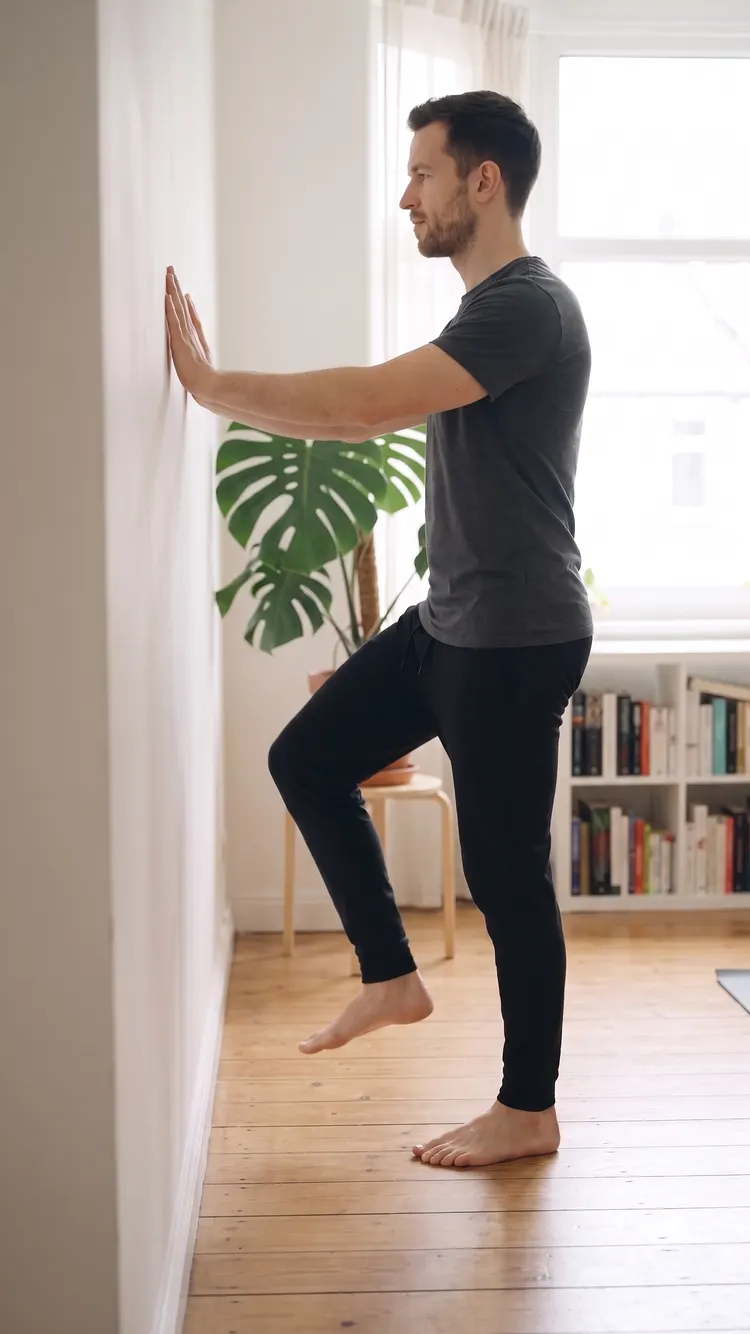
March in place
A minute of easy marching warms up your legs and your breathing.
- Face the wall, about a forearm's length away, both hands flat on the wall at shoulder height. Or use a kitchen counter. Feet hip-width apart.
- Lift your right knee a little, as if stepping over a low line. Place the foot down softly.
- Lift your left knee and place it down softly.
- Keep marching at a steady, comfortable pace for the time on your page.
EasierKeep your toes on the floor and just lift your heels, one at a time.
Take care
- Balance: keep your hands on the wall or counter. Stay tall and look ahead.
- Sensitive knees: keep the lift low and the landing soft.
- Sensitive hips: lift only a short way.
Incline push-up
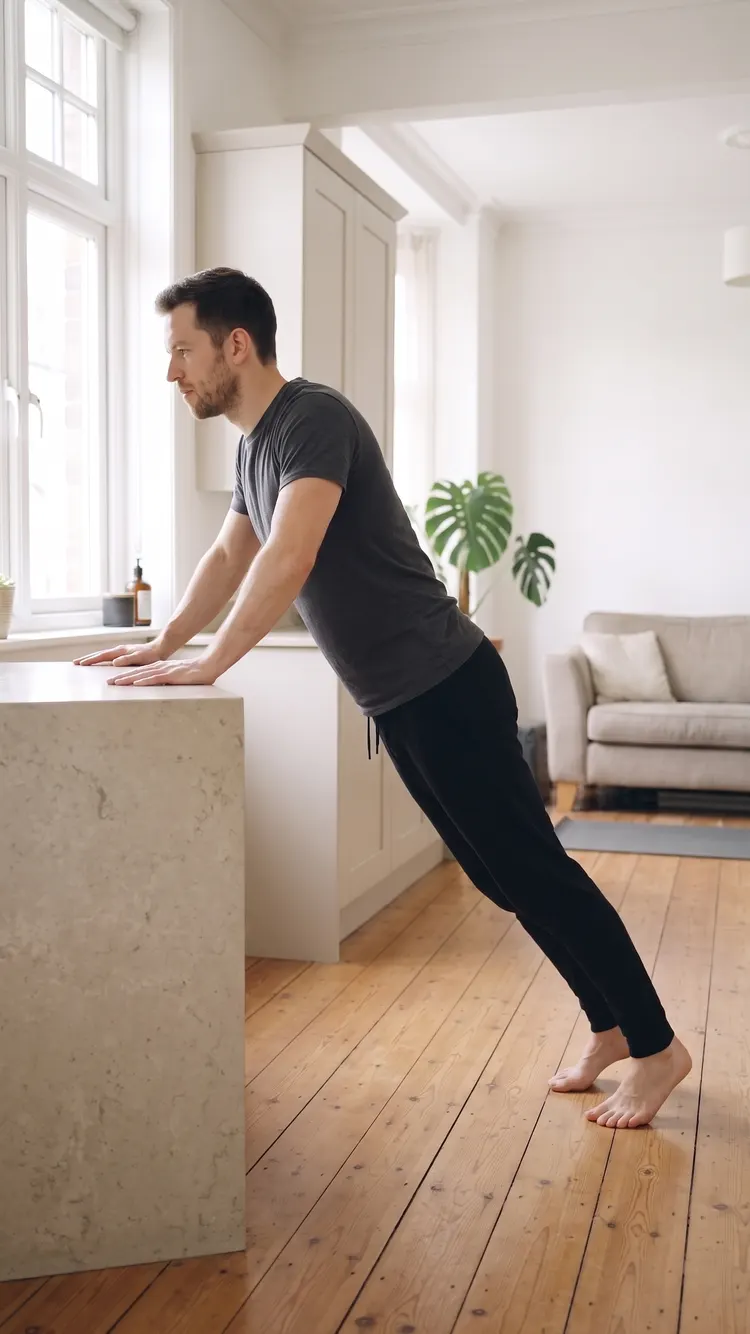
Your push for the day. Hands on a counter, one straight slope.
- Choose a heavy counter or table that will not slide, and wear non-slip shoes.
- Place your hands on the edge, a little wider than your shoulders. Walk your feet back until your body makes one straight slope from head to heels.
- Breathe in and bend your elbows, bringing your chest toward the edge.
- Breathe out and press back until your arms are straight but not locked.
- Do 6 to 8 push-ups, then walk your feet in and stand tall.
EasierWalk your feet in closer so you lean less, or do wall push-ups.
Take care
- Wrists: if flat hands ache, make soft fists on the counter, or choose a wall push-up.
- Shoulders: use a smaller bend and stop short of any pinch.
- Balance: keep the counter steady and your shoes non-slip.
Box squat
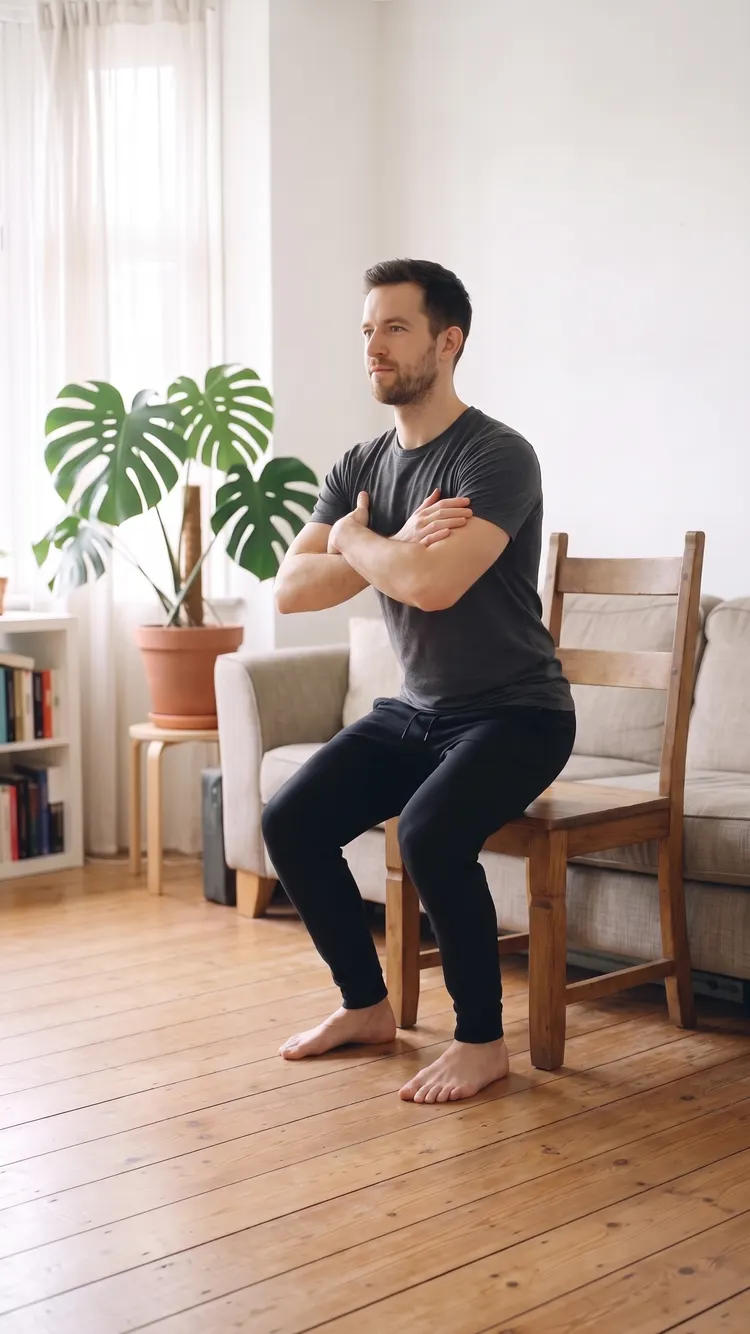
Your squat, to a chair behind you. Touch the seat and stand.
- Set a sturdy chair with no wheels, its back against a wall. Stand in front of it with the backs of your legs near the seat, feet shoulder-width apart, toes turned out a little.
- Cross your arms on your chest, or hold them out in front for balance.
- Breathe in and send your hips back, then bend your knees, keeping your chest tall.
- Touch the seat lightly with your hips. Do not drop onto it.
- Breathe out, press through your whole foot and stand up. Repeat 6 times.
EasierUse a higher seat with a firm cushion that will not slide, or rest your hands on your thighs. Sit to stand is the step below.
Take care
- Knees: go down only as far as is comfortable. Beginners, stay at chair height or higher.
- Hips: keep your feet a little wider if your hips pinch at the bottom.
- Balance: keep the chair against the wall so it cannot slide. Stand up slowly.
Doorframe row
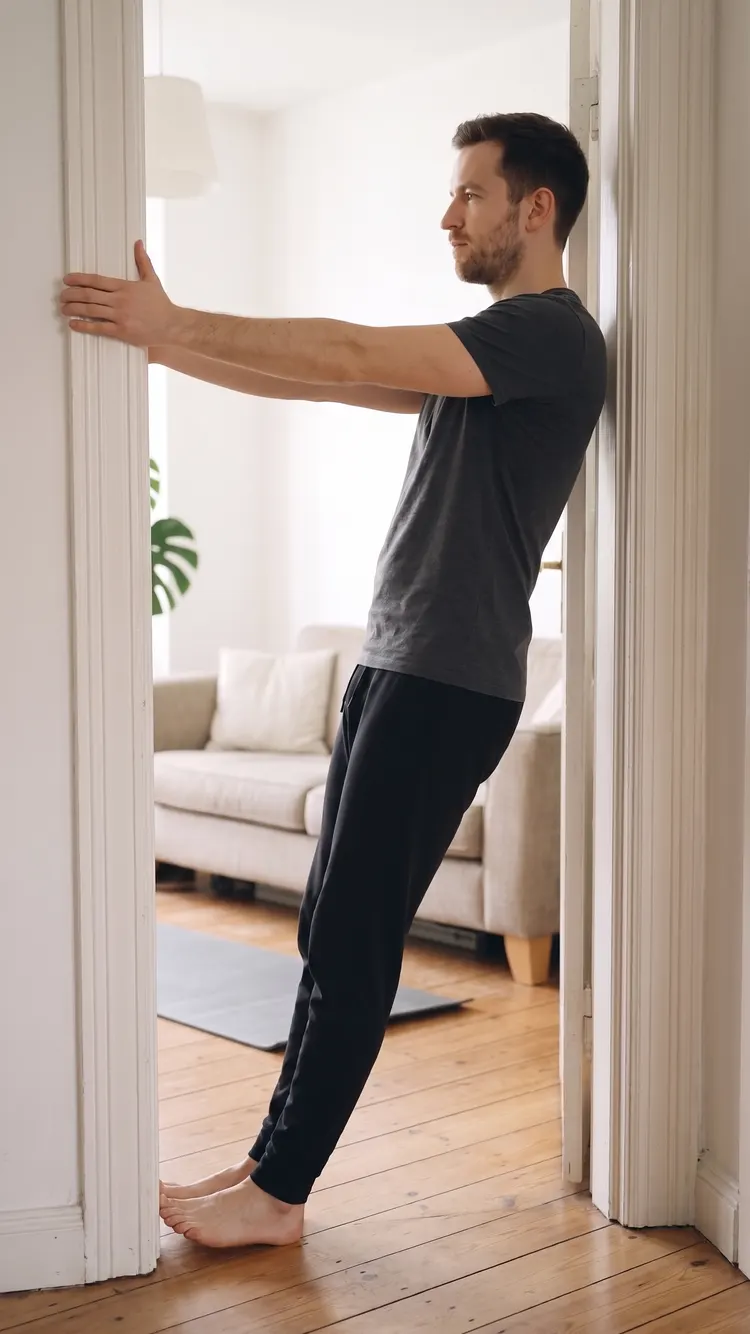
Your pull. Hold the frame, lean back a little and pull your chest in.
- Pick a doorway where the door is fixed open or has been removed, and the frame is solid. Wear non-slip shoes.
- Stand in the doorway with your feet close to the frame. Hold both sides of the frame at chest height with your arms straight.
- Lean back a little, keeping your body in one straight line.
- Breathe out and bend your elbows, pulling your chest toward the frame.
- Breathe in and straighten your arms slowly. Do 5 to 6 reps.
EasierMove your feet a little farther back so you stand more upright and lean less.
Take care
- Shoulders: pull gently and stop short of any pinch.
- Balance: lean back only a little, and check that the frame is firm and the door cannot swing.
- Back: keep your body in one line and do not arch your lower back.
Plank
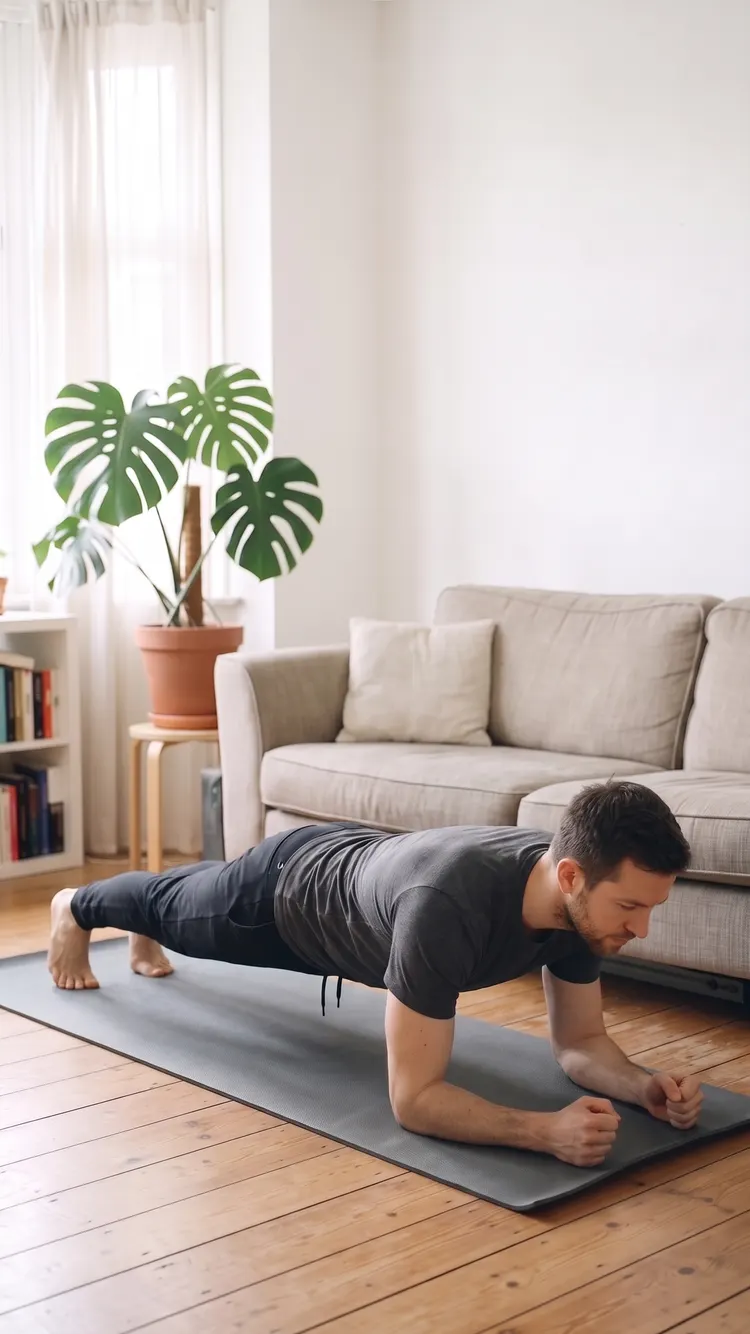
Your hold. On your forearms, in one line, for a short time.
- Kneel on a mat or folded towel on a non-slip floor.
- Place your forearms on the floor, elbows right under your shoulders.
- Step your feet back one at a time, toes tucked, until your body is one straight line from head to heels.
- Squeeze your legs together and draw your lower belly in a little.
- Hold for 15 to 20 seconds, breathing steadily, then lower your knees and rest.
EasierLower your knees to the mat for a knee plank, or hold for a shorter time.
Take care
- Shoulders: keep your elbows right under your shoulders. Stop short of any pinch.
- Wrists: this plank rests on your forearms, so your wrists stay free.
- Back: if your lower back aches, lift your hips a little or lower your knees.
Glute bridge
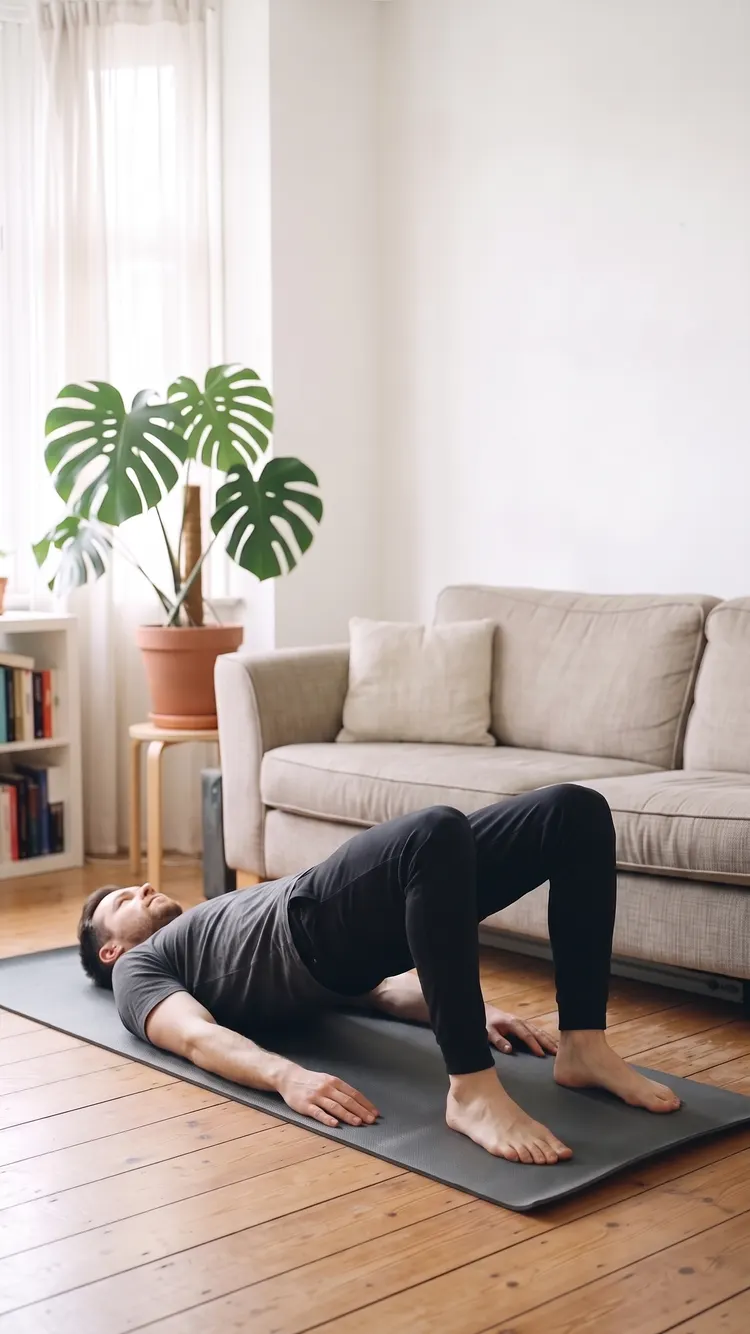
Your finish. Lie back and lift your hips, then lower slowly.
- Use a mat or folded towel on a non-slip floor. Get down to the floor slowly and lie on your back.
- Bend your knees with your feet flat, hip-width apart, close enough that you can touch your heels with your fingers. Arms by your sides.
- Breathe out and press through your whole foot, lifting your hips until your body makes a line from shoulders to knees.
- Pause for 1 breath at the top.
- Breathe in and lower slowly, one part of your back at a time. Repeat 4 times.
EasierLift your hips only a few inches, or do 3 reps.
Take care
- Back: do not arch your lower back at the top. If it aches, lift less.
- Hips: if the back of your thigh cramps, bring your feet a little closer.
Where it fits
- Three days a week, with a day of rest between.
- On the days between, walk or stretch.
- Each week, add a rep or slow one move down. Never both at once.
Build strength with a 28-day calisthenics plan
Short daily sessions at home, a step harder as you get stronger.
What the guidelines say
Activities that strengthen muscles: at least 2 days a week.
Too much? Be as active as your abilities and conditions allow.
Any amount of activity is better than none, and all activity counts.
World Health Organization, Physical activity, fact sheet
Stop if anything hurts, or if you feel dizzy, short of breath or chest pressure.
General information, not medical advice.