How to do a push-up
Hands under your shoulders, body in one line, breathe in as you lower and out as you press. Here is how, and how to scale it.
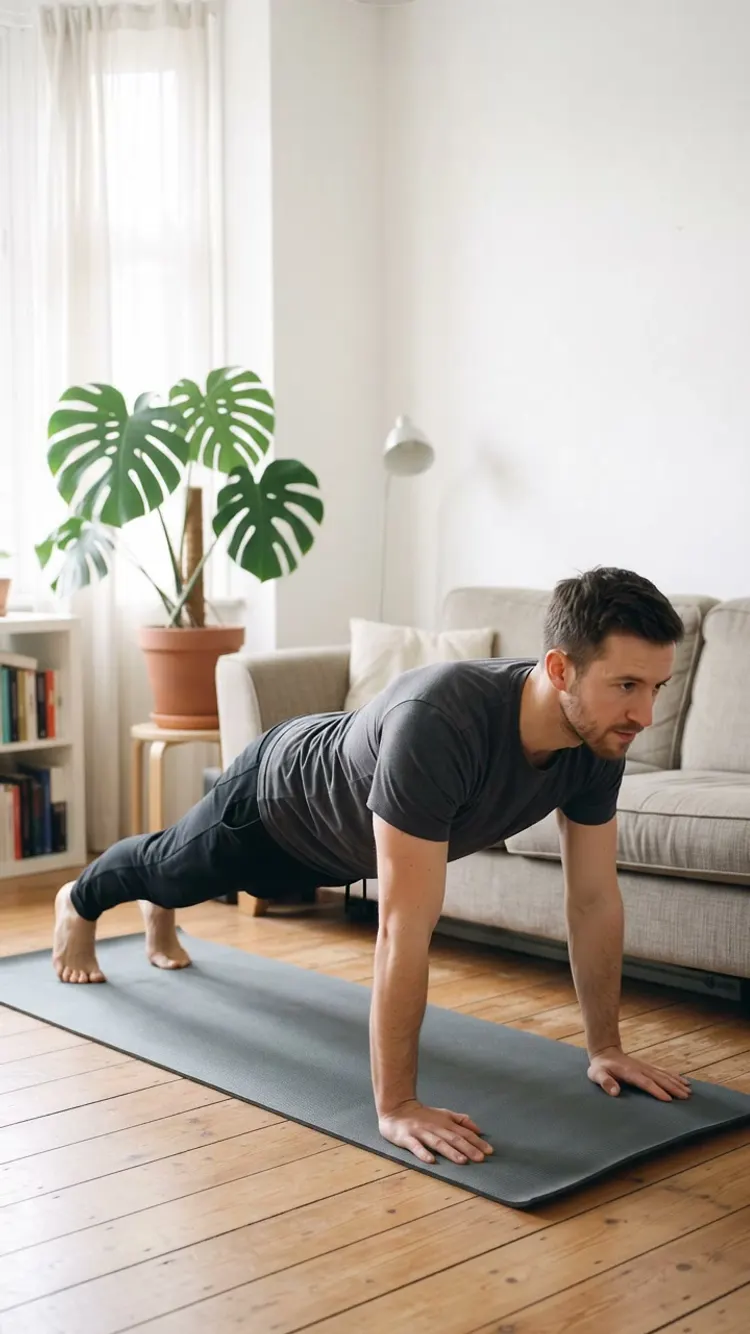
A good push-up is a plank that moves. Your body stays in one straight line from head to heels while your elbows bend and straighten. That sounds simple, and it is easy to get wrong: hips that sag, a head that dips, a half bend that does not count.
The fix is almost always to scale the move, not to push harder. Drop to your knees, or put your hands on a counter, and do the same careful push-up there. Stop while your form is still clean and rest before the next set.
The moves, one by one
The push-up first, then the knee push-up that scales it, and the plank that trains the straight line.
Push-up
Step your feet back until your body is one line. Breathe in as you lower and out as you press.
- Use a mat or folded towel on a non-slip floor. Get down to the floor slowly onto your hands and knees.
- Place your hands under your shoulders, a little wider. Step your feet back, hip-width apart, until your body makes a straight line from head to heels.
- Breathe in and bend your elbows, bringing your chest toward the floor.
- Breathe out and press back until your arms are straight but not locked.
- Do 4 to 6 push-ups. Stop while your form is still clean, then lower to your knees and rest.
EasierDrop to your knees (a knee push-up), or put your hands on a sturdy counter.
Take care
- Wrists: make soft fists on the floor, or choose an incline push-up with hands on a counter.
- Shoulders: use a smaller bend and stop short of any pinch.
- Back: if your lower back sags, drop to your knees.
Knee push-up
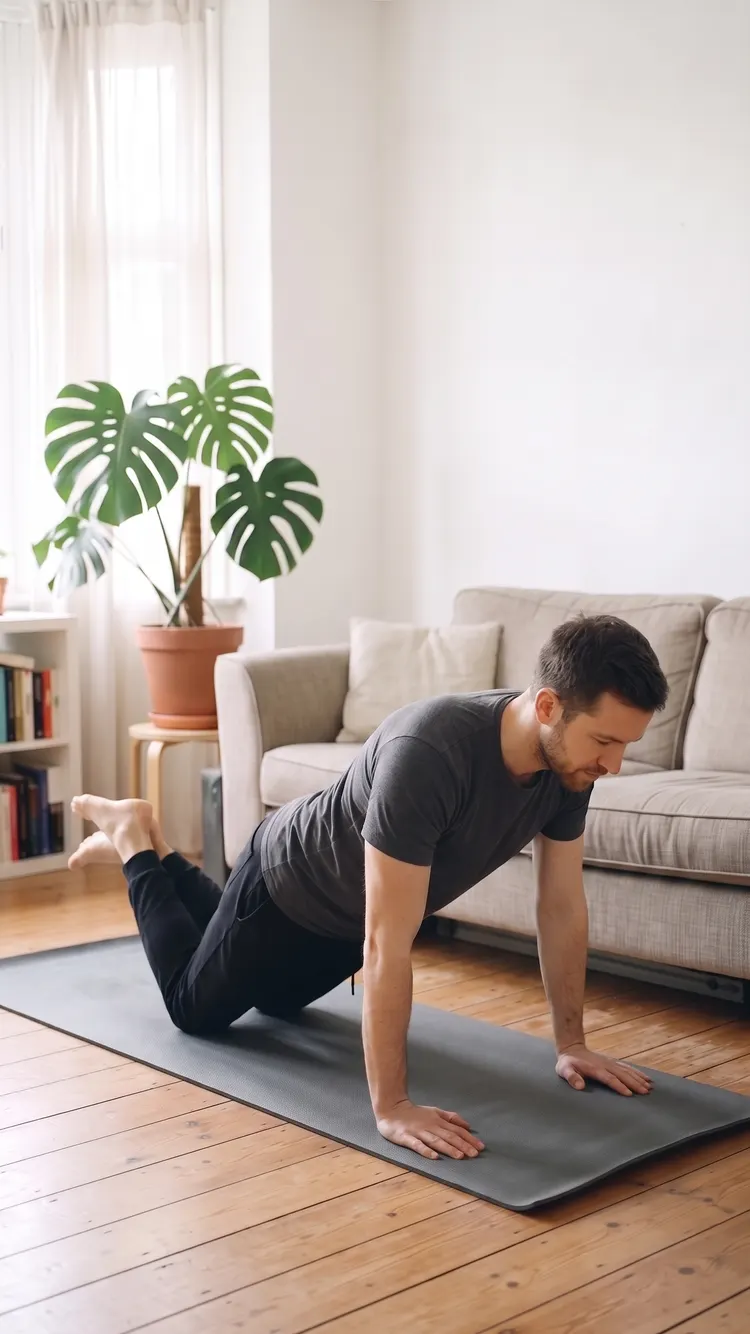
The same movement with a shorter lever. Use it to finish a set when the full push-up goes.
- Use a mat or folded towel on a non-slip floor. Get down to the floor slowly onto your hands and knees.
- Place your hands under your shoulders, a little wider. Walk your knees back until your body makes a straight line from head to knees.
- Breathe in and bend your elbows, bringing your chest toward the floor. A small bend is fine.
- Breathe out and press back until your arms are straight but not locked.
- Do 5 to 8 push-ups, then lower your hips and rest.
EasierPut your hands on a sturdy counter and do incline push-ups, or do fewer reps with a smaller bend.
Take care
- Wrists: make soft fists on the floor, or choose the incline push-up with hands on a counter.
- Knees: add a second folded towel under them.
- Shoulders: use a smaller bend and stop short of any pinch.
Plank
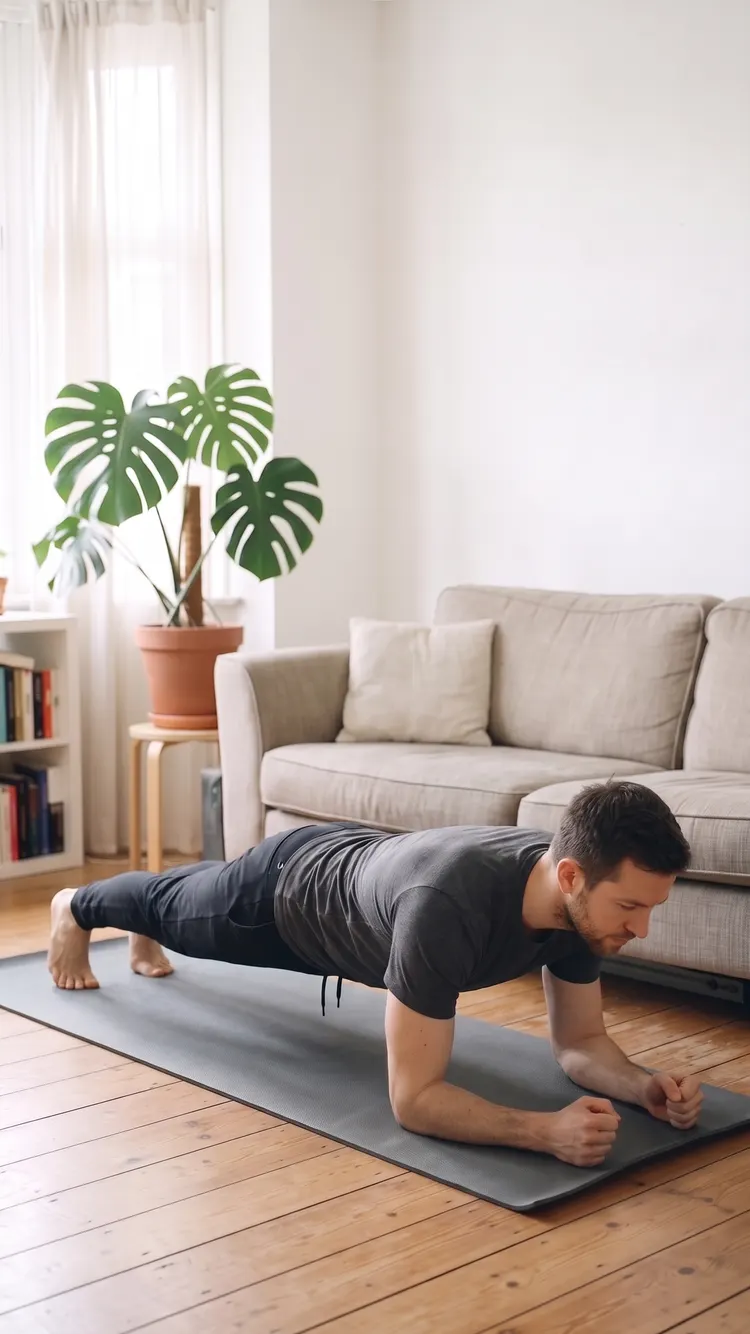
On your forearms, in one straight line. It builds the stiff body a push-up needs.
- Kneel on a mat or folded towel on a non-slip floor.
- Place your forearms on the floor, elbows right under your shoulders.
- Step your feet back one at a time, toes tucked, until your body is one straight line from head to heels.
- Squeeze your legs together and draw your lower belly in a little.
- Hold for 15 to 20 seconds, breathing steadily, then lower your knees and rest.
EasierLower your knees to the mat for a knee plank, or hold for a shorter time.
Take care
- Shoulders: keep your elbows right under your shoulders. Stop short of any pinch.
- Wrists: this plank rests on your forearms, so your wrists stay free.
- Back: if your lower back aches, lift your hips a little or lower your knees.
Practising three days a week
- Do a few full push-ups with clean form, then drop to your knees for the rest of the set.
- Hold a short plank after, to train the straight line.
- Add a rep, or lower for three counts, when you finish a set easily.
Build strength with a 28-day calisthenics plan
Short daily sessions at home, a step harder as you get stronger.
What the guidelines say
Activities that strengthen muscles: at least 2 days a week.
Too much? Be as active as your abilities and conditions allow.
Any amount of activity is better than none, and all activity counts.
World Health Organization, Physical activity, fact sheet
Stop if anything hurts, or if you feel dizzy, short of breath or chest pressure.
General information, not medical advice.