Box squat: how to do it
A squat to a chair behind you. The chair tells you how far to sit back, so you can lower with control. Works: legs and hips.
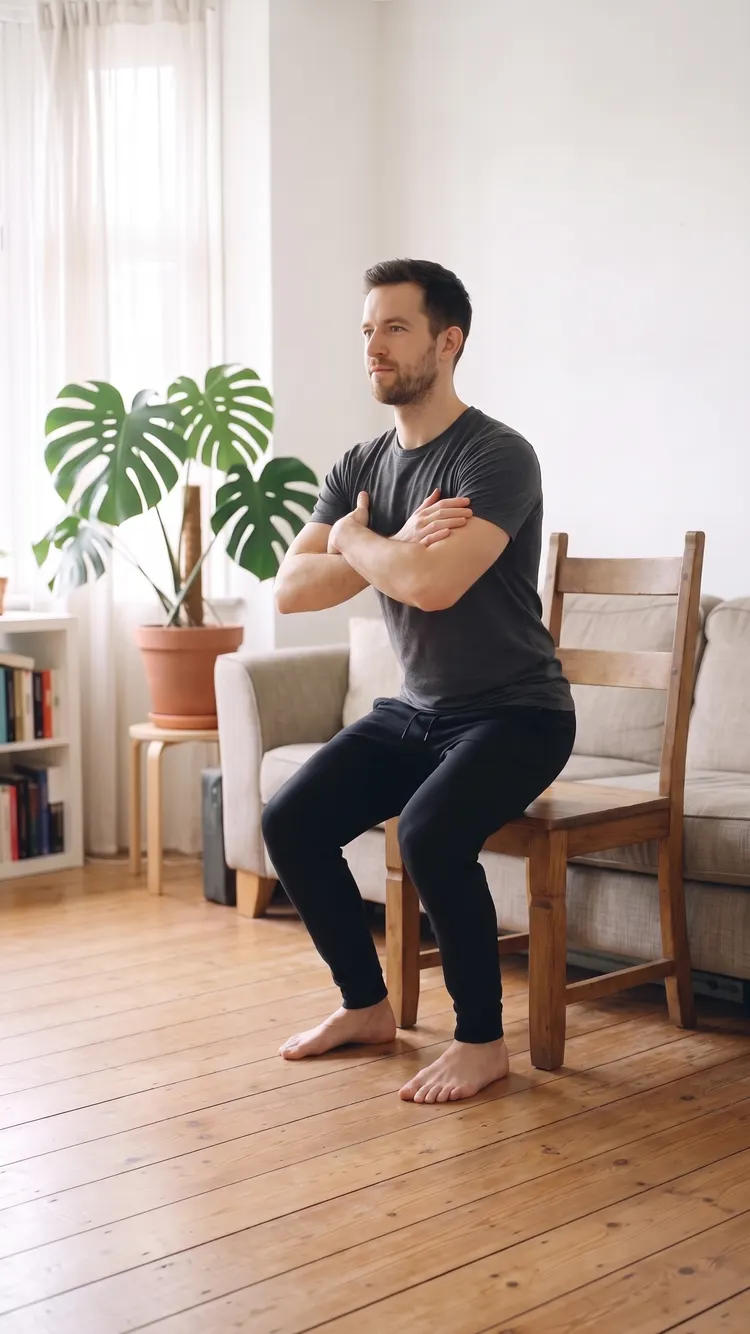
How to do it
- Set a sturdy chair with no wheels, its back against a wall. Stand in front of it with the backs of your legs near the seat, feet shoulder-width apart, toes turned out a little.
- Cross your arms on your chest, or hold them out in front for balance.
- Breathe in and send your hips back, then bend your knees, keeping your chest tall.
- Touch the seat lightly with your hips. Do not drop onto it.
- Breathe out, press through your whole foot and stand up. Repeat 6 times.
As you go
- Knees track over your toes, not caving in.
- Breathe in on the way down, breathe out as you stand.
- Take 3 counts to sit back, and touch the seat, not rest on it.
What it works
- Works
- legs and hips
- Position
- Standing
- Have nearby
- a sturdy chair, a wall
- Effort
- Moderate
An easier and a harder version
Use a higher seat with a firm cushion that will not slide, or rest your hands on your thighs. Sit to stand is the step below.
Do 8 reps, or skip the touch and hover just above the seat. The squat is the step up.
Take care
- Knees: go down only as far as is comfortable. Beginners, stay at chair height or higher.
- Hips: keep your feet a little wider if your hips pinch at the bottom.
- Balance: keep the chair against the wall so it cannot slide. Stand up slowly.
Where it is in the plans
In our calisthenics plan: 3 of 28 days, first on day 2, Squat and bridge.
The plan's note that day: Sit back to touch the chair, then stand.
| Plan | Days | First time | How much, that day |
|---|---|---|---|
| Calisthenics plan | 3 of 28 days: 2 to 3 and 6 | Day 2, week 1: Squat and bridge | 2 rounds: about 6 reps in a 50 s slot, 30 s rest |
In the plan, this move plays as a looping video with a spoken cue.
Box squat: day 2 of a 28-day calisthenics plan
Short daily sessions at home, a step harder as you get stronger.
What the guidelines say
Activities that strengthen muscles: at least 2 days a week.
Stop if anything hurts, or if you feel dizzy, short of breath or chest pressure.
General information, not medical advice.