Workout for women over 50
Standing moves with a chair or a wall in reach: a quiet step, a sit to stand, a hip hinge, a calf stretch and a weight shift.
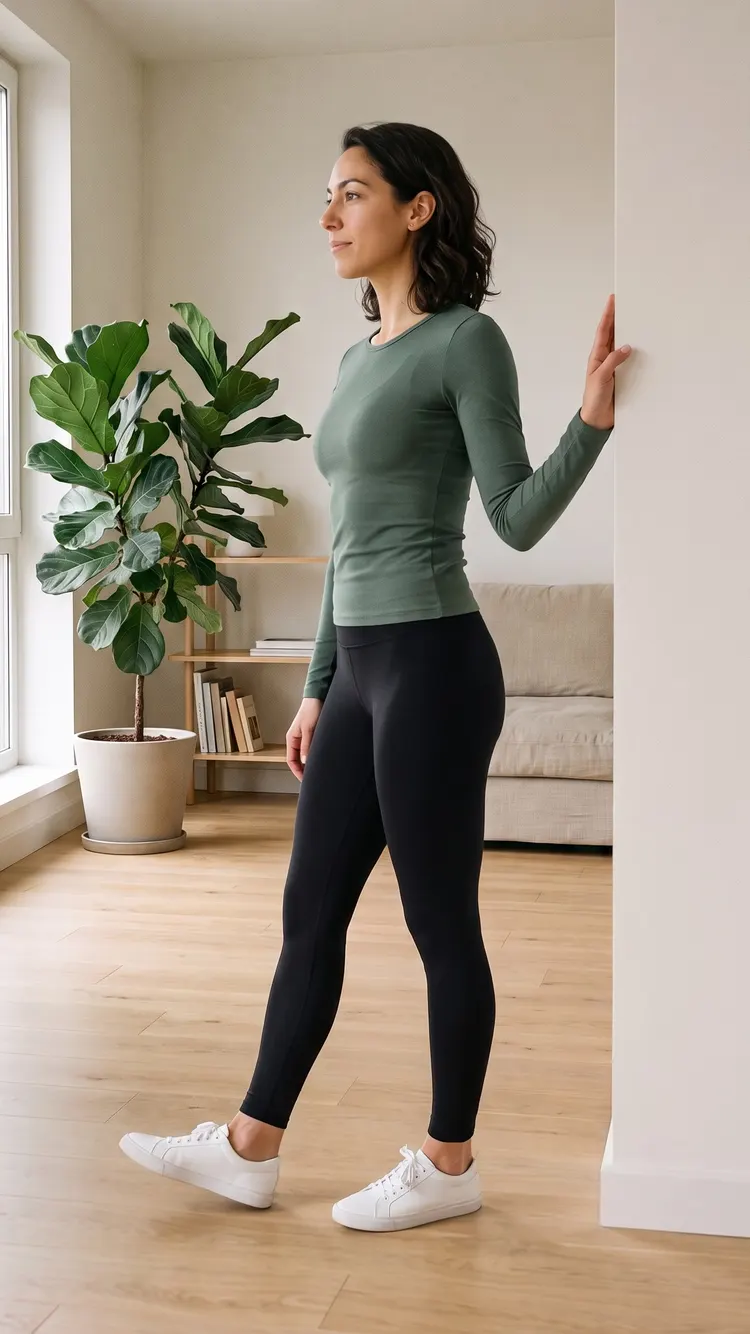
Many women start a routine at 50 because they want to feel steady and strong in everyday life: on the stairs, getting up from a low chair, carrying the shopping. These five moves practise exactly those things, one at a time.
The pace is slow on purpose. A tai chi step asks you to land softly and let your weight arrive last, which is harder than it sounds and needs no equipment at all. Work at the level where you can keep your breathing easy.
The moves, one by one
Keep a sturdy chair or a wall within reach for every move.
Tai chi step
A single small step, taken quietly. It trains the habit of feeling the floor before you put weight on it.
- Stand beside the counter or the wall, one hand on it. Feet hip-width apart, knees soft.
- Shift your weight onto your left foot.
- Slide your right foot forward about half a foot's length, touching the floor with your heel first and your toes up.
- Roll the foot down slowly. Move your weight forward when you feel steady.
- Shift back and bring the foot in. Do 4 steps, then turn around slowly in small steps, one hand on the wall or counter, so it is on your other side. Do 4 steps on that side.
EasierTouch the heel forward only, without moving your weight onto it, then bring it back.
Take care
- Balance: keep a hand on the wall, counter or chair back. Take small steps only.
- Sensitive knees: keep the step short and the knee soft.
- Hips: keep the steps small.
Sit to stand
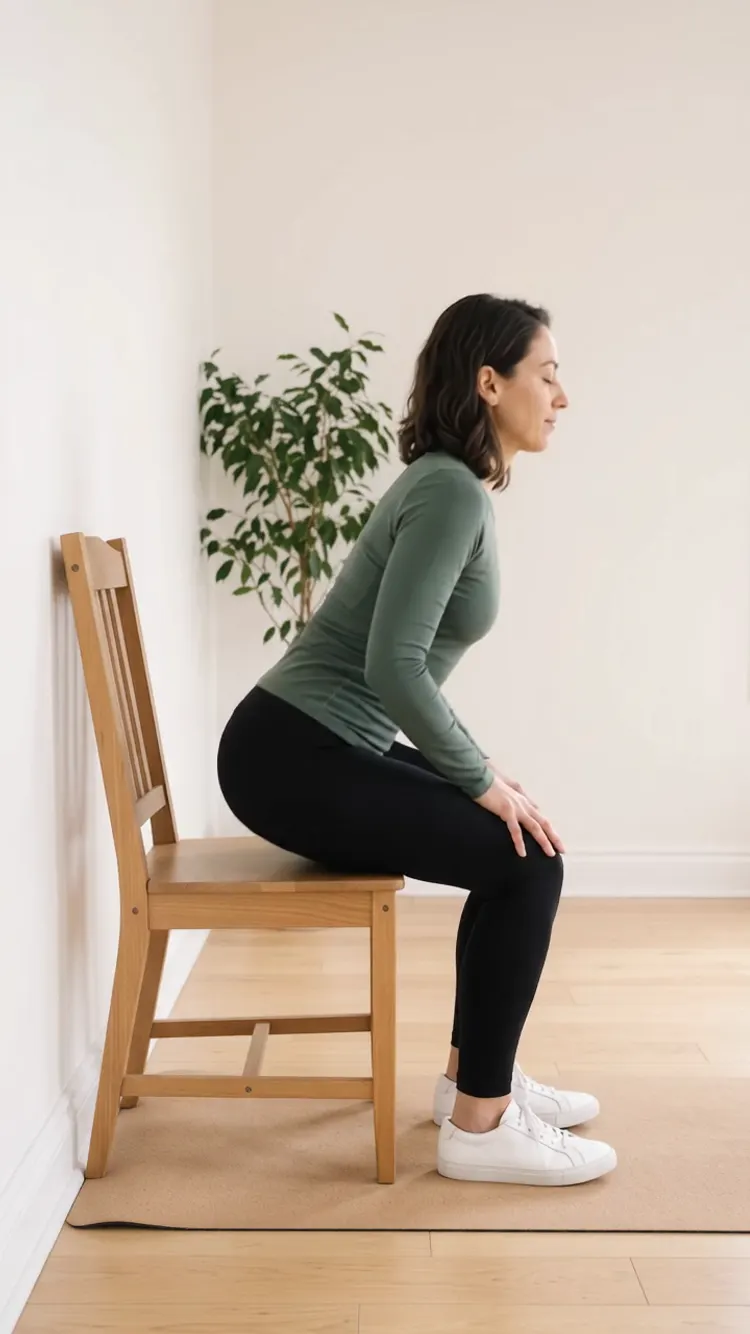
You do this many times a day already. Doing it on purpose, slowly, is strength practice for your legs.
- Use a sturdy chair with no wheels, its back against a wall. Sit near the front edge with your feet flat, hip-width apart.
- Lean forward from your hips with a flat back, keeping your nose over your toes.
- Breathe out and press through your whole foot to stand up. Use your hands on your thighs if you want to.
- Stand tall for 1 breath, with your knees soft.
- Step back until you feel the chair on the back of your legs, then breathe in and lower slowly. Repeat 5 times.
EasierUse your hands on your thighs, or a higher seat with a firm cushion that will not slide.
Take care
- Sensitive knees or hips: use your hands to help and keep your feet a little wider.
- Back: lean from the hips and keep your back long.
- Balance: pause after you stand until you feel steady. Stand up slowly.
- Hip replacement: use a higher seat and bend at the hip only as far as your surgeon or therapist allows.
Hip hinge
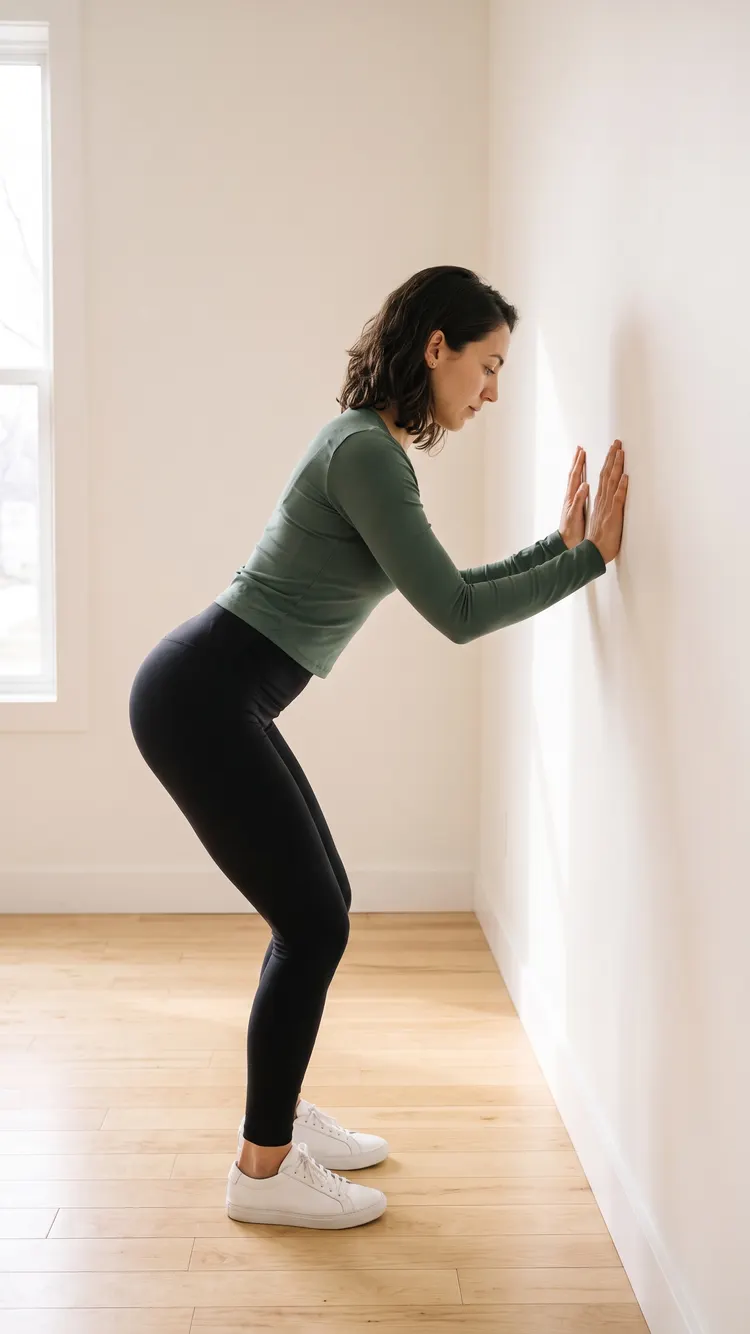
Keep your back long and let your hips travel back. A wall under your hands keeps it steady.
- Face the wall, about a forearm's length away, both hands flat on the wall at shoulder height. Or use a kitchen counter. Knees soft.
- Breathe in and stand tall. Gently draw your belly in.
- Breathe out and push your hips straight back, as if closing a door behind you with your bottom.
- Slide your hands down the wall, keeping your back long.
- Breathe in at the bottom. Breathe out and press your feet down to stand. Do 6 reps.
EasierGo back only a short way, and keep both hands on the support.
Take care
- Sensitive back: keep the hinge small and your back long.
- Sensitive hips and knees: use a smaller range.
- Low bone density: hinge only a short way with a flat back.
- Hip replacement: hinge only as far as your surgeon or therapist allows. The seated version is a smaller bend.
Wall calf stretch
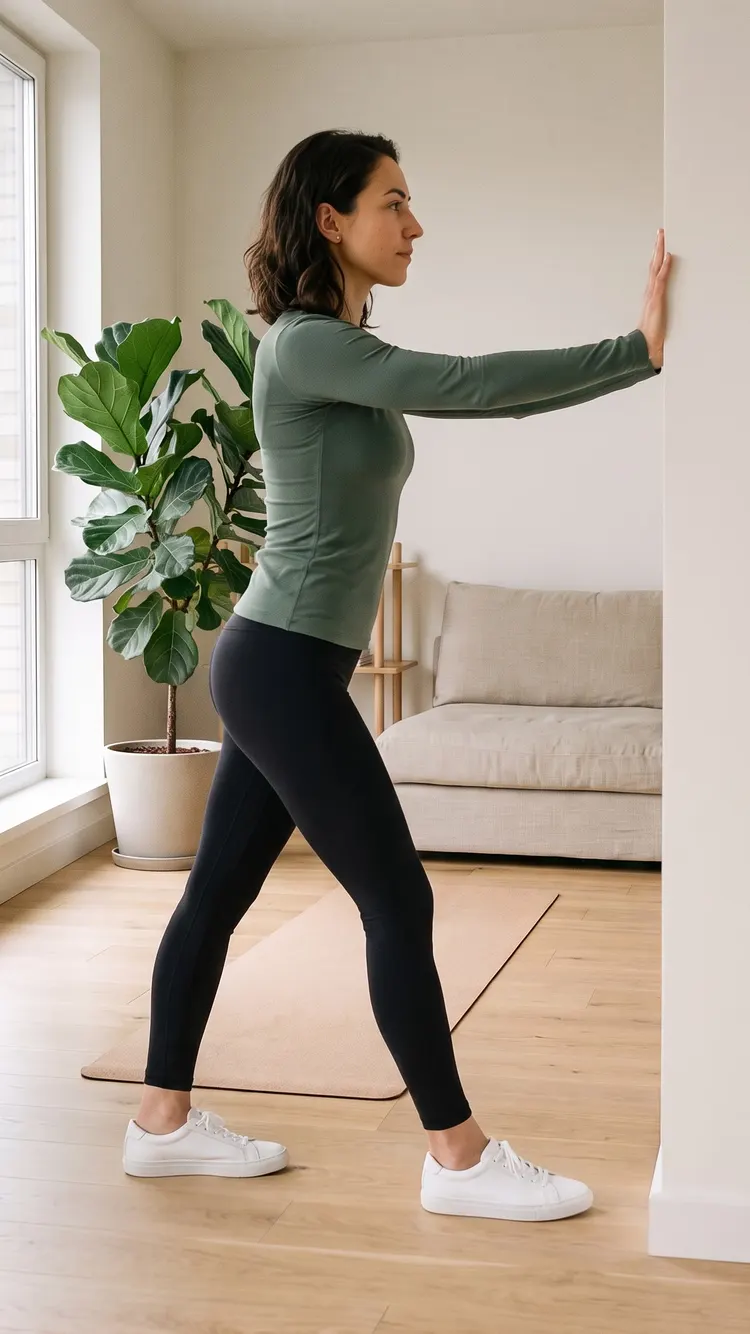
A long breath in this stretch is a good way to loosen up after the standing moves.
- Stand facing a wall an arm's length away. Place both hands on it at shoulder height.
- Step your right foot back about 1 stride. Keep both heels on the floor and toes pointing forward.
- Bend your left knee a little. Keep your right leg long with a soft knee.
- Breathe out and lean your hips gently toward the wall until you feel a stretch in the right calf.
- Hold for 4 slow breaths. Step back in and switch legs.
EasierTake a shorter stride and lean less.
Take care
- Balance: keep both hands on the wall and wear non-slip shoes.
- Sensitive knees: keep the front knee soft.
- Low bone density: lean only as far as feels easy.
Weight shift
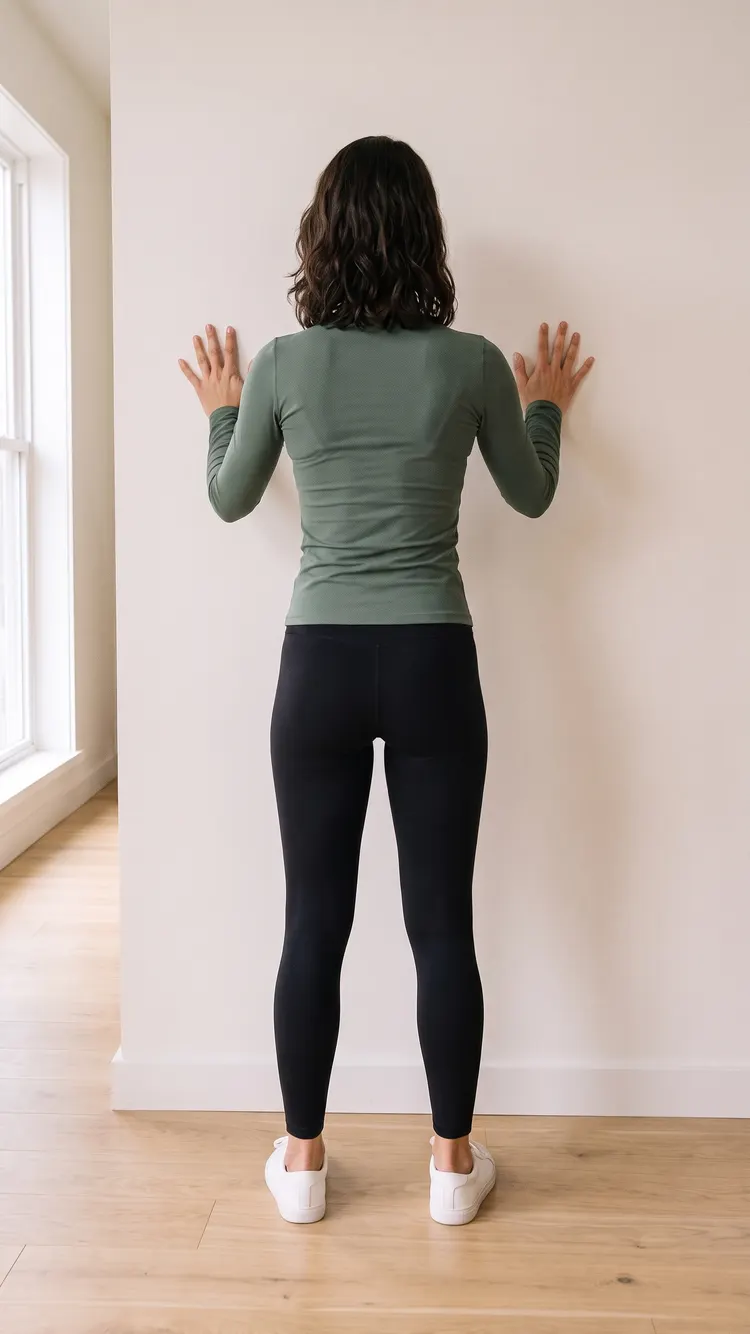
End with the rocking. It brings the set down to an easy pace and practises balance with support.
- Face the wall, about a forearm's length away, both hands flat on the wall at shoulder height. Or use a kitchen counter. Feet hip-width apart, knees soft.
- Breathe out and slowly move your weight onto your right foot, until it carries most of you.
- Keep your head over your hips and your chest tall.
- Breathe in and pour your weight back through the middle to your left foot.
- Rock side to side 8 times, slowly.
EasierShift only an inch or two, with both hands on the support.
Take care
- Balance: keep at least one hand on the wall, counter or chair back.
- Sensitive knees: keep the standing knee soft.
- Sensitive hips: shift a smaller way.
Fitting it in
- Four days: the five moves, one round, about as long as a cup of tea takes to cool.
- Walk on the other days if you like, at a pace you can talk at.
- When a move feels easy, add a second round or slow it down, one change at a time.
Practise balance at home with a 28-day walking plan
Short daily sessions at home, a step harder as you get stronger.
What the guidelines say
Balance activities: walking heel to toe, standing up from sitting.
Tai chi is a balance exercise. Have a sturdy chair or wall nearby.
National Institute on Aging (NIH), Three Types of Exercise
Any amount of activity is better than none, and all activity counts.
World Health Organization, Physical activity, fact sheet
Stop if anything hurts, or if you feel dizzy, short of breath or chest pressure.
General information, not medical advice.