Workout for women over 60
Start seated and finish on your feet: a march, leg extensions, a sit to stand, a side leg lift and a calm seated mountain.
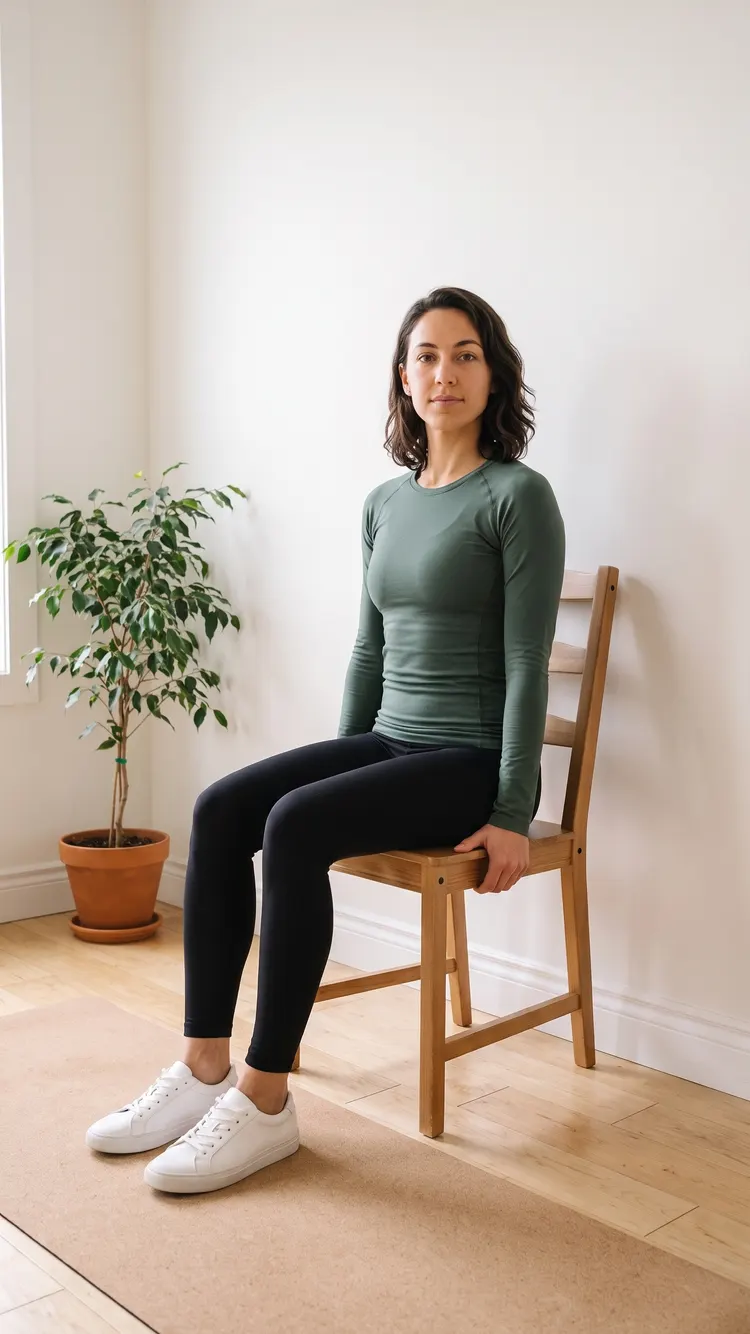
Over 60, a routine that begins in a chair is a sensible way in. You can warm up sitting, work your legs with support, and only then stand for the moves that need it. A sturdy chair with no wheels, set against a wall, is the only thing you need.
These moves come from the chair plan, where the same ideas build over four weeks. Here you get a first taste: five moves, each with its steps, a picture, and an easier way to do it if today is a slow day.
The moves, one by one
Sit tall near the front of the chair, feet flat, and take the moves in order.
Seated march
An easy march on the spot, sitting down. It gets the blood moving without asking much of you.
- Sit tall near the front of your chair, feet flat. Rest your hands on your thighs or hold the sides of the seat.
- Lift your right knee a few inches. Place the foot softly down.
- Lift your left knee. Keep alternating at an easy pace.
- Swing your arms gently if it feels natural.
- March for 30 to 60 seconds.
EasierLift your heels only, keeping your toes on the floor.
Take care
- Back: sit tall rather than slumping.
- Hips: keep the lift small if a hip feels pinchy.
Seated leg extension
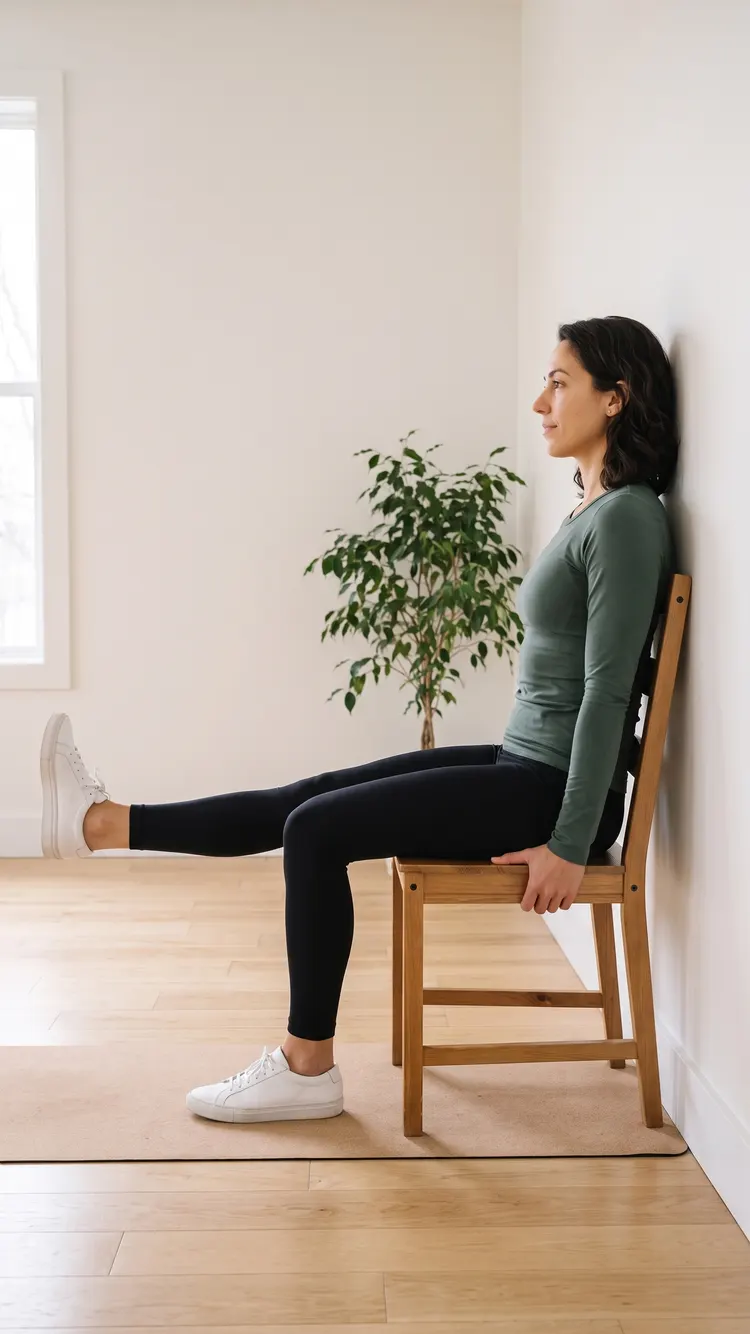
Straighten one leg, then the other. It is everyday strength for the muscles you use to stand up.
- Sit tall near the front of your chair, feet flat, hands holding the seat or resting on your thighs.
- Breathe out and slowly straighten your right knee until your leg is level, or as far as is easy.
- Pause for 2 counts. Keep your knee soft, not locked.
- Breathe in and lower your foot slowly to the floor.
- Do 8 times, then switch legs.
EasierLift only halfway. Or do fewer reps, 4 each leg.
Take care
- Knees: stop short of fully straight and stay soft. A small range is fine.
- Back: sit tall; do not slump to reach.
Sit to stand
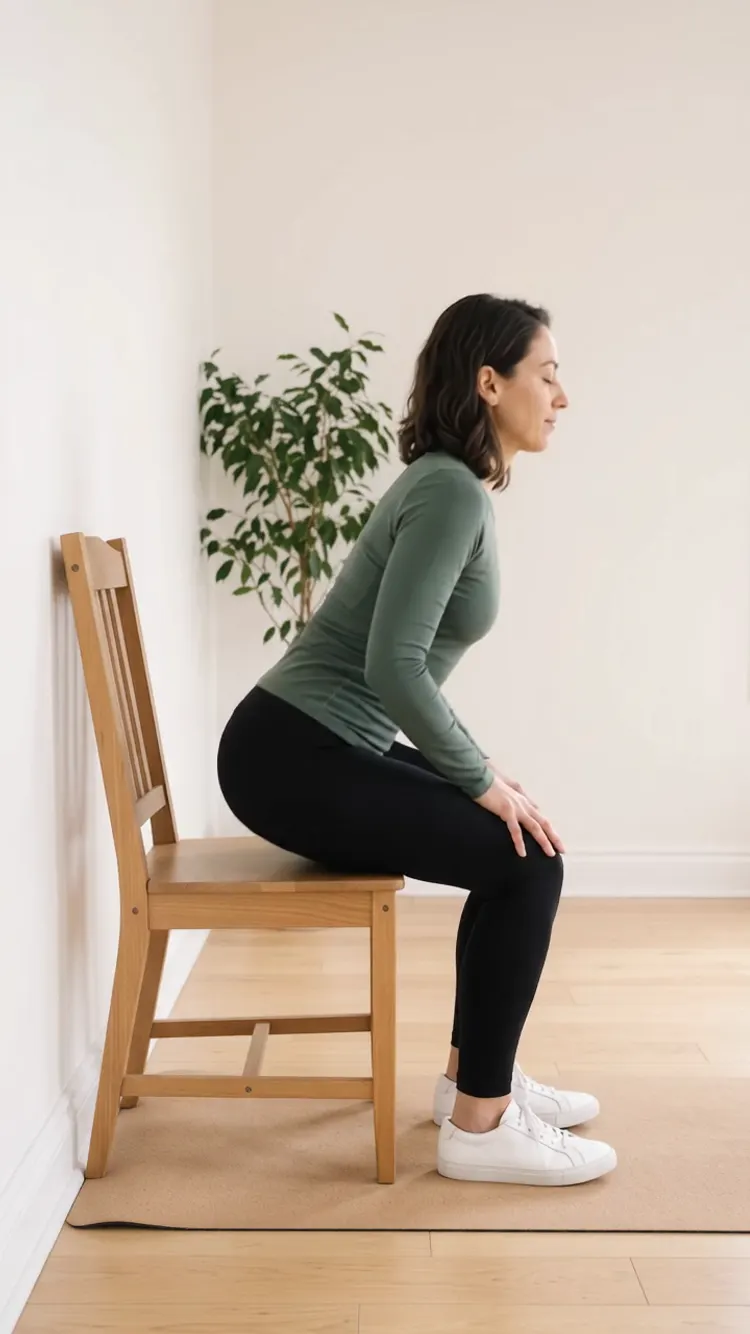
Use your hands on your thighs if you want to. Taking three counts to sit back down is the real work.
- Use a sturdy chair with no wheels, its back against a wall. Sit near the front edge with your feet flat, hip-width apart.
- Lean forward from your hips with a flat back, keeping your nose over your toes.
- Breathe out and press through your whole foot to stand up. Use your hands on your thighs if you want to.
- Stand tall for 1 breath, with your knees soft.
- Step back until you feel the chair on the back of your legs, then breathe in and lower slowly. Repeat 5 times.
EasierUse your hands on your thighs, or a higher seat with a firm cushion that will not slide.
Take care
- Sensitive knees or hips: use your hands to help and keep your feet a little wider.
- Back: lean from the hips and keep your back long.
- Balance: pause after you stand until you feel steady. Stand up slowly.
- Hip replacement: use a higher seat and bend at the hip only as far as your surgeon or therapist allows.
Chair side leg lift
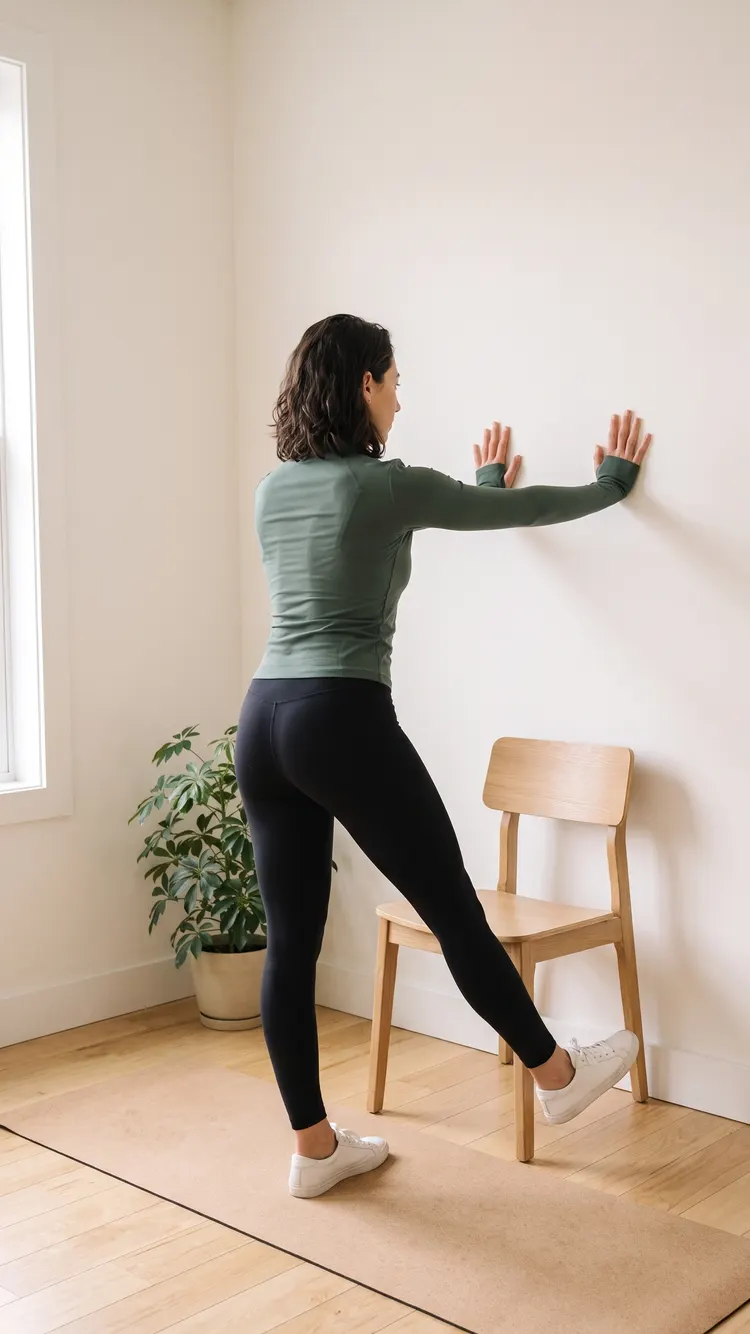
Stand at the wall and hold on. A chance to practise balance with something solid next to you.
- Stand up slowly and take one breath. Face the wall, about a forearm's length away, both hands flat on the wall at shoulder height. Or use a kitchen counter.
- Stand with your feet hip-width apart.
- Breathe out and slowly lift your right leg out to the side, a few inches. Toes face forward.
- Breathe in and lower it with control.
- Do 8 lifts, then switch legs.
EasierKeep your toes on the floor and slide the foot out and back. Or lift less.
Take care
- Balance: keep both hands on the wall or counter. Choose the seated version on any unsteady day.
- Hips: keep the lift small.
Seated mountain
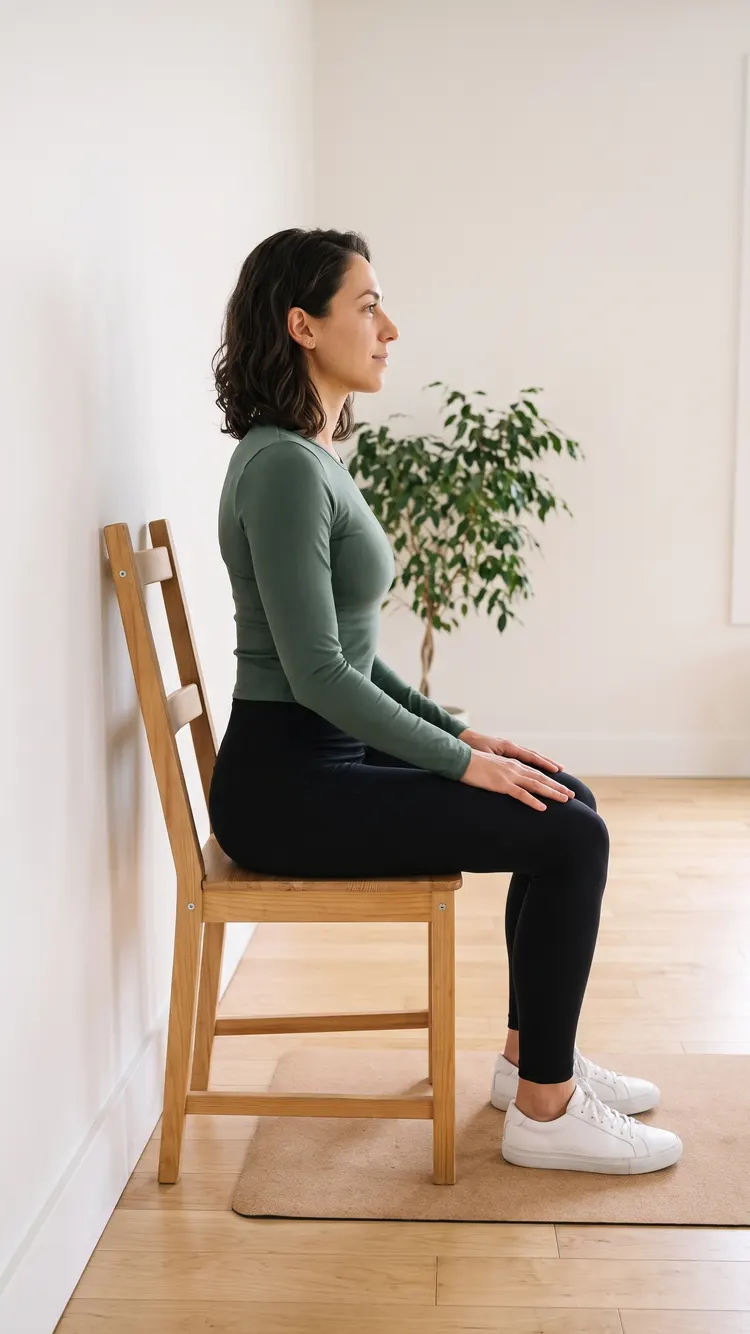
Finish tall and calm. It is a good place to slow your breathing before you get up.
- Sit toward the front half of a sturdy chair with no wheels, with its back against a wall.
- Put your feet flat on the floor, about hip-width apart, knees over ankles.
- Rest your hands on your thighs, palms down.
- Lengthen up through the crown of your head. Let your shoulders drop away from your ears.
- Breathe in through your nose for 4 counts, then breathe out slowly for 4 counts. Stay for 5 to 8 breaths.
EasierSit back against the chair back and take 3 breaths.
Take care
- Back: sit tall without arching. Think long, not stiff.
- Stand up slowly when you finish.
A gentle week
- Three days: all five moves once through, resting between them.
- On other days, repeat just the seated march and the seated mountain.
- Rest when you want to. Any amount counts, and a short day is still a day.
Sit, stand and move with a 28-day chair plan
Short daily sessions at home, a step harder as you get stronger.
More to read and try
- Workouts by ageRoutines for women and men over 40 to 70
- Women over 70Easy chair moves
- Men over 40Push, squat, pull and plank
- Women over 50Balance and everyday strength
- Steps a day at 60About 6,000 to 8,000, and what that takes
- Does chair yoga work?What the trials found
- Chair yoga for today
- Printable chair exercises
What the guidelines say
Balance activities: walking heel to toe, standing up from sitting.
Too much? Be as active as your abilities and conditions allow.
Any amount of activity is better than none, and all activity counts.
World Health Organization, Physical activity, fact sheet
Stop if anything hurts, or if you feel dizzy, short of breath or chest pressure.
General information, not medical advice.