Exercises women over 50 might skip or change
The public health pages we read name no moves to avoid because of age alone. Their list is for osteoporosis, which the National Institute on Aging says affects about one in five women over 50: movements that twist the spine, bending forward from the waist, and high-impact exercise. If that may be you, those are the ones to change first.
What the sources say
Osteoporosis affects about one in five women over age 50.
National Institute on Aging (NIH), Osteoporosis
With osteoporosis, avoid activities that may cause a fracture: movements that twist your spine, like swinging a golf club, or bend you forward from the waist, like sit-ups and toe touches.
National Institute on Aging (NIH), Osteoporosis
If you have osteoporosis, avoid high-impact exercise.
National Institutes of Health, Osteoporosis
A physical therapist can recommend safe exercises, teach you how to move safely, and create a program tailored to your needs.
National Institutes of Health, Osteoporosis
At the time of menopause, women may lose bone mass quickly for several years.
National Institute on Aging (NIH), Osteoporosis
The U.S. Preventive Services Task Force recommends that women over 65 get tested for osteoporosis. Women younger than 65 who are at greater risk should also get tested.
National Institute on Aging (NIH), Osteoporosis
The same page asks for weight-bearing exercise: strength training, walking, hiking, jogging, climbing stairs, tennis and dancing.
National Institute on Aging (NIH), Osteoporosis
The numbers, worked out
| A move from our plans | What the move's card says | Where it is |
|---|---|---|
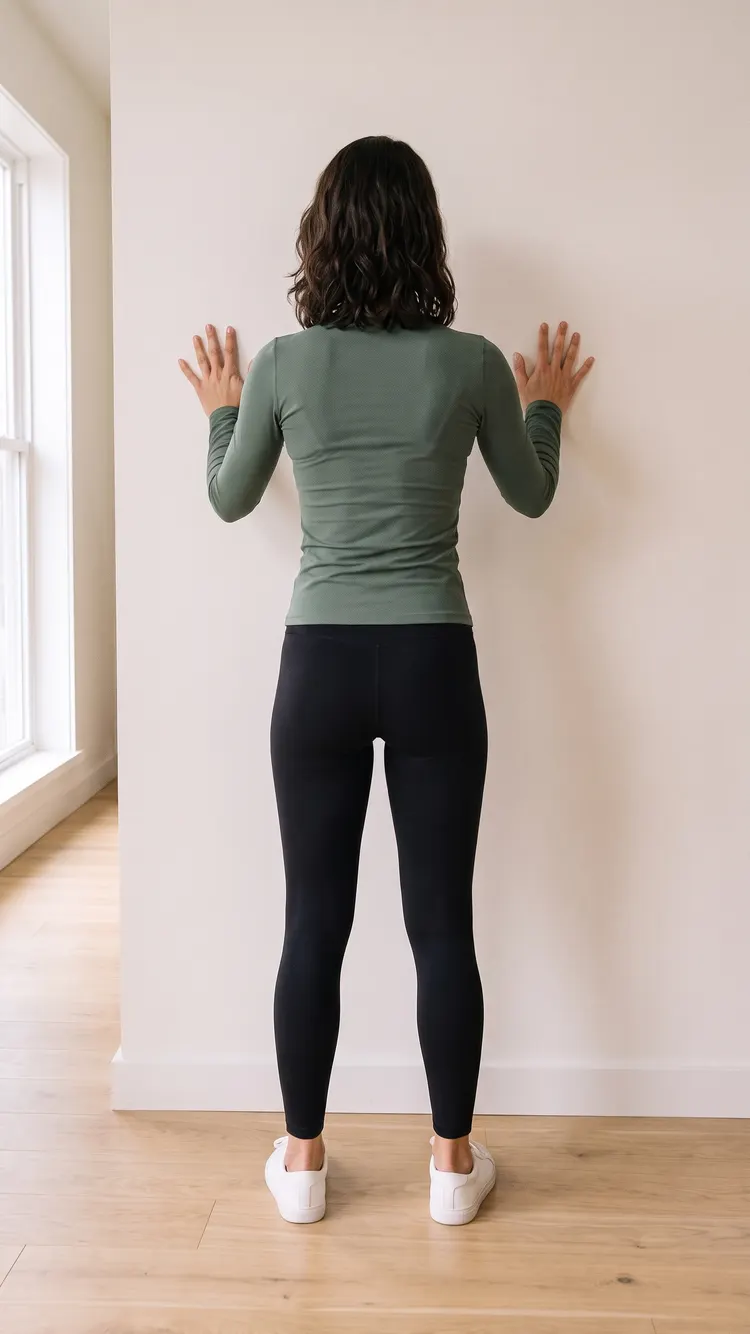
| Wall calf stretch | Lean only as far as feels easy. | Walking plan, 17 days. |
| Chest opener | Keep the movement small and do not arch your back. | Walking plan, 16 days. Chair plan, 6 days. |
| Seated figure four | Keep your back long and do not push on your knee. | Chair plan, 10 days. |
| Heel dig stretch | Keep your back long and do not round it. | Walking plan, 16 days. Chair plan, 10 days. |
| Hip hinge | Hinge only a short way with a flat back. | Chair plan, 4 days. |
| Seated cat-cow | Keep the rounding very small and never push into it with your hands. | Chair plan, 12 days. |
| Gentle seated twist | Keep the turn very small, never pull on the chair to go further. | Chair plan, 2 days. |
| Side reach | Keep the lean small and never pull on the chair to go farther. | Walking plan, 15 days. Chair plan, 8 days. |
Every move in our plans with such a line, as its card says it. Days are out of each plan's 28.
What to do with it
- Not sure about your bones? Ask your doctor whether a test fits your age and risk.
- If you have been told you have osteoporosis, ask a physical therapist which moves suit you before you change your routine.
- Changing a move usually means a smaller range: the table above shows how our own cards say it, move by move.
Keep moving at your level with a 28-day walking plan
Short daily sessions at home, a step harder as you get stronger.
Stop if anything hurts, or if you feel dizzy, short of breath or chest pressure.
General information, not medical advice.