Workout for women over 40
Five moves for a steady week at home: a brisk walk, a hip hinge, calf raises, a weight shift and a slow tai chi opening.
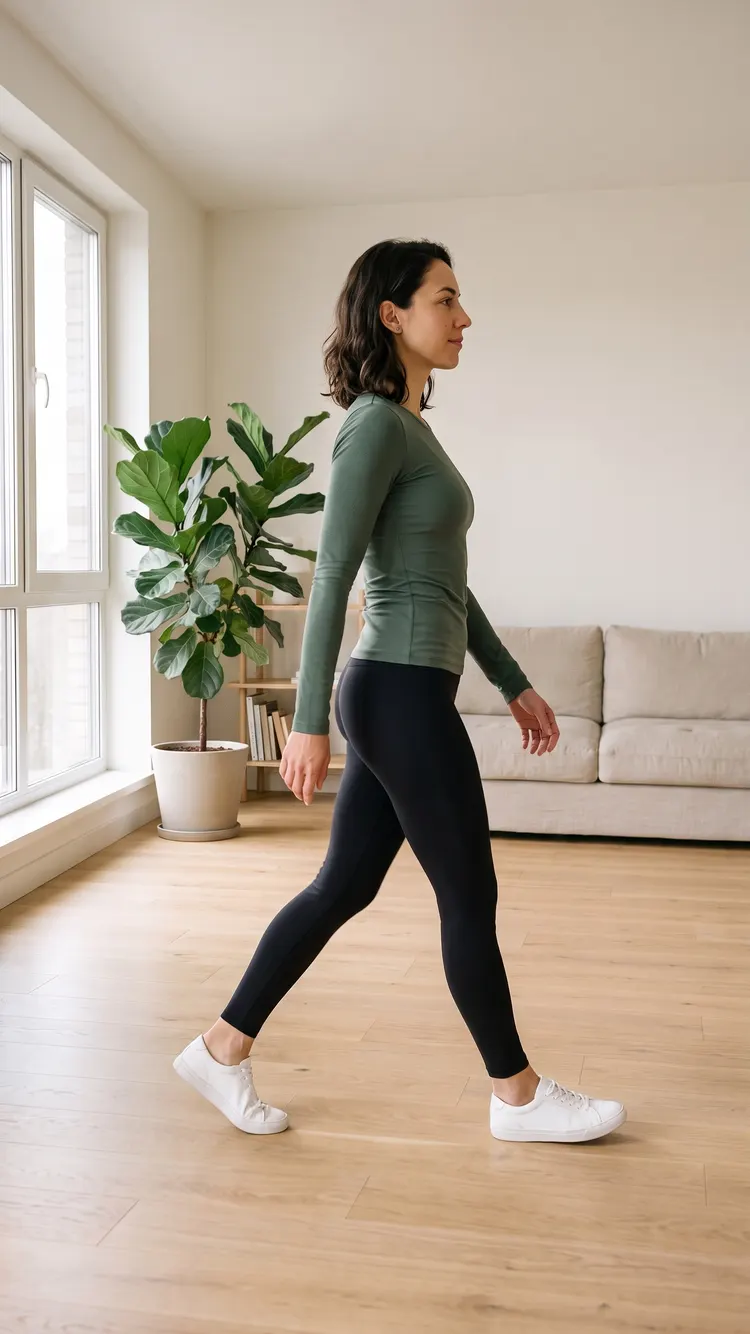
Over 40 is a good time to build a routine you can keep. This one is short on purpose. Each move takes a minute or two, you need a wall or a counter to rest a hand on, and nothing is hard to set up.
It covers the three things the public guidelines mention: steady movement, working your muscles, and practising balance. You do not have to do all five every day. Pick what fits your morning and repeat it.
The moves, one by one
Do them in this order, and rest between moves as long as you like.
Brisk walk
Start here to warm up. Swing your arms and walk at a pace where you can talk but not sing.
- Wear supportive, non-slip shoes. Choose a flat, clear path indoors or out.
- Start with 1 minute at an easy pace. Let your arms swing naturally.
- Quicken your pace a little. Check: can you say a full sentence? Can you sing a song? If you can talk but not sing, you are in the right place.
- Hold that pace for the time on your page. Slow down if you cannot talk.
- Finish with 1 minute of easy walking.
EasierWalk at a pace where you could sing, and make it a little quicker over several days.
Take care
- Balance: choose a clear path and good light. Walk with a friend or near a bench if you wish.
- Sensitive knees: shorten your stride and walk on a smooth surface.
- On hot days, walk indoors or in the shade, and drink water if you like, unless a doctor has limited your fluids.
Hip hinge
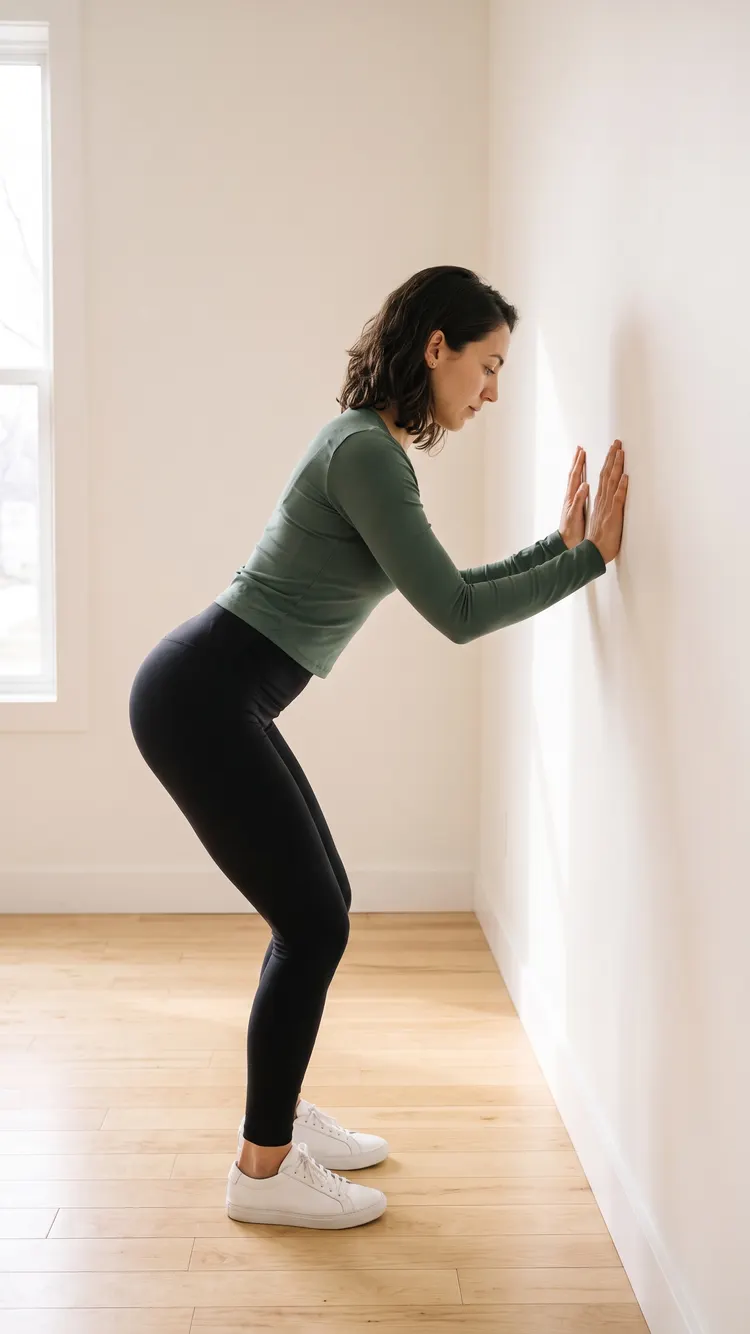
This teaches you to bend from the hips, the way you would pick something up from the floor with your legs doing the work.
- Face the wall, about a forearm's length away, both hands flat on the wall at shoulder height. Or use a kitchen counter. Knees soft.
- Breathe in and stand tall. Gently draw your belly in.
- Breathe out and push your hips straight back, as if closing a door behind you with your bottom.
- Slide your hands down the wall, keeping your back long.
- Breathe in at the bottom. Breathe out and press your feet down to stand. Do 6 reps.
EasierGo back only a short way, and keep both hands on the support.
Take care
- Sensitive back: keep the hinge small and your back long.
- Sensitive hips and knees: use a smaller range.
- Low bone density: hinge only a short way with a flat back.
- Hip replacement: hinge only as far as your surgeon or therapist allows. The seated version is a smaller bend.
Supported calf raise
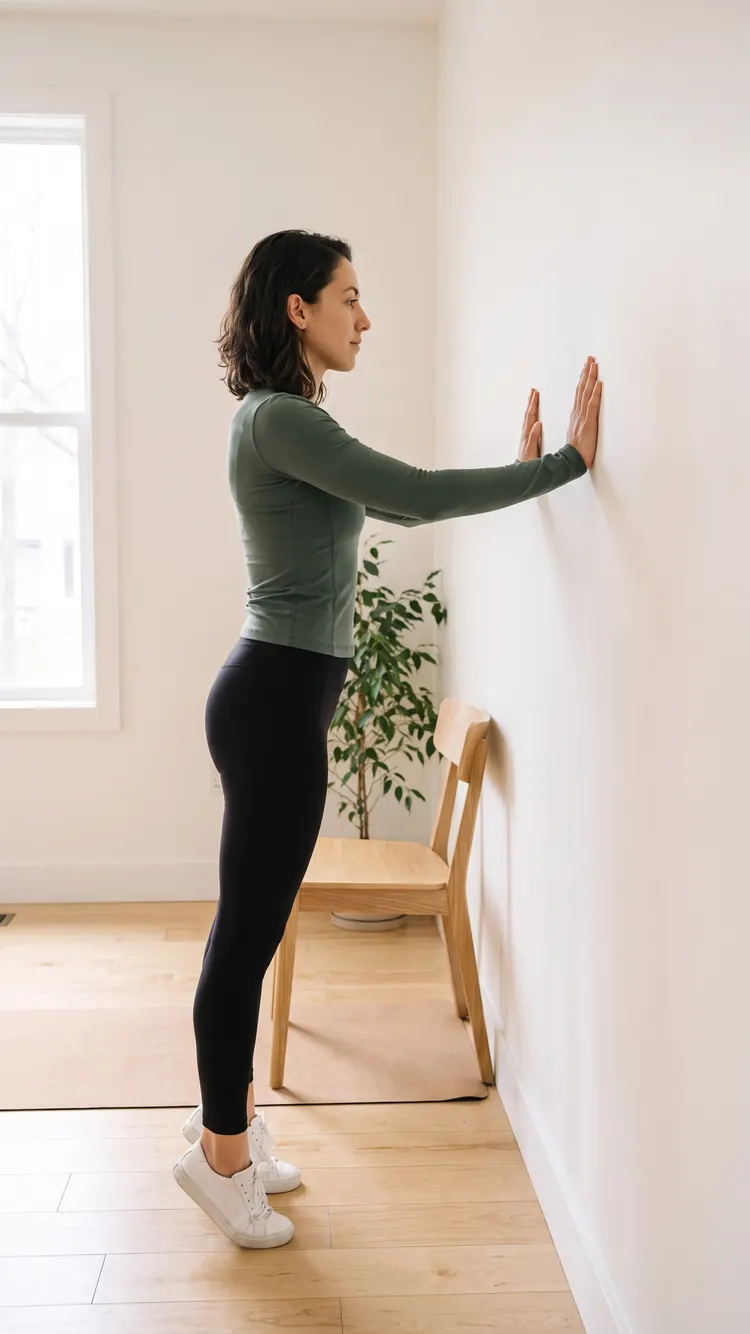
Hold the wall and lift your heels. It wakes up your lower legs before you walk any further.
- Face the wall, about a forearm's length away, both hands flat on the wall at shoulder height. Or use a kitchen counter.
- Stand with your feet hip-width apart and your knees soft.
- Breathe out and slowly rise onto the balls of your feet, as if lifting a string from the top of your head.
- Pause for 1 breath at the top.
- Breathe in and lower slowly. Do 6 reps.
EasierRise only a small way, with both hands firmly on the support.
Take care
- Balance: keep at least one hand on the wall, counter or chair back. Stand up slowly.
- Sensitive knees: keep your knees soft.
- Ankle or foot trouble: choose the seated version.
Weight shift
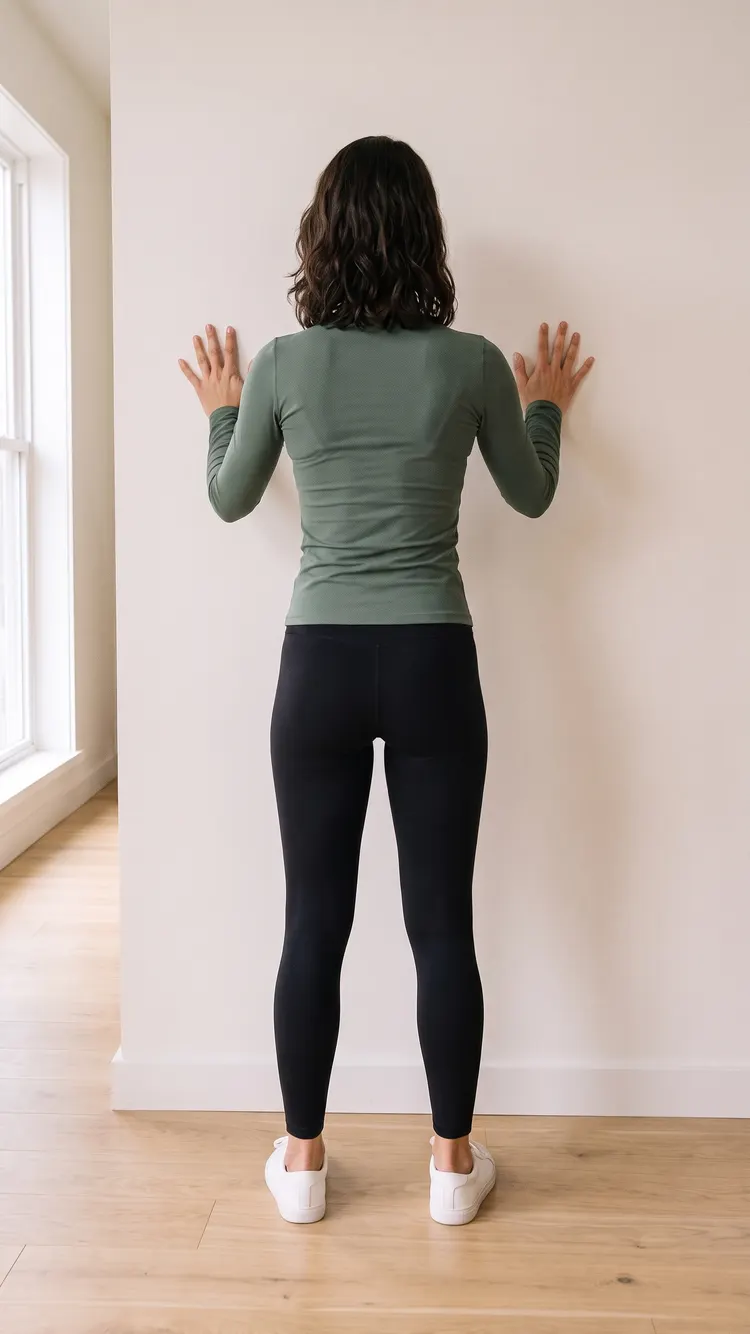
Rocking from foot to foot is balance practice in its simplest form, and the wall is right there.
- Face the wall, about a forearm's length away, both hands flat on the wall at shoulder height. Or use a kitchen counter. Feet hip-width apart, knees soft.
- Breathe out and slowly move your weight onto your right foot, until it carries most of you.
- Keep your head over your hips and your chest tall.
- Breathe in and pour your weight back through the middle to your left foot.
- Rock side to side 8 times, slowly.
EasierShift only an inch or two, with both hands on the support.
Take care
- Balance: keep at least one hand on the wall, counter or chair back.
- Sensitive knees: keep the standing knee soft.
- Sensitive hips: shift a smaller way.
Tai chi opening
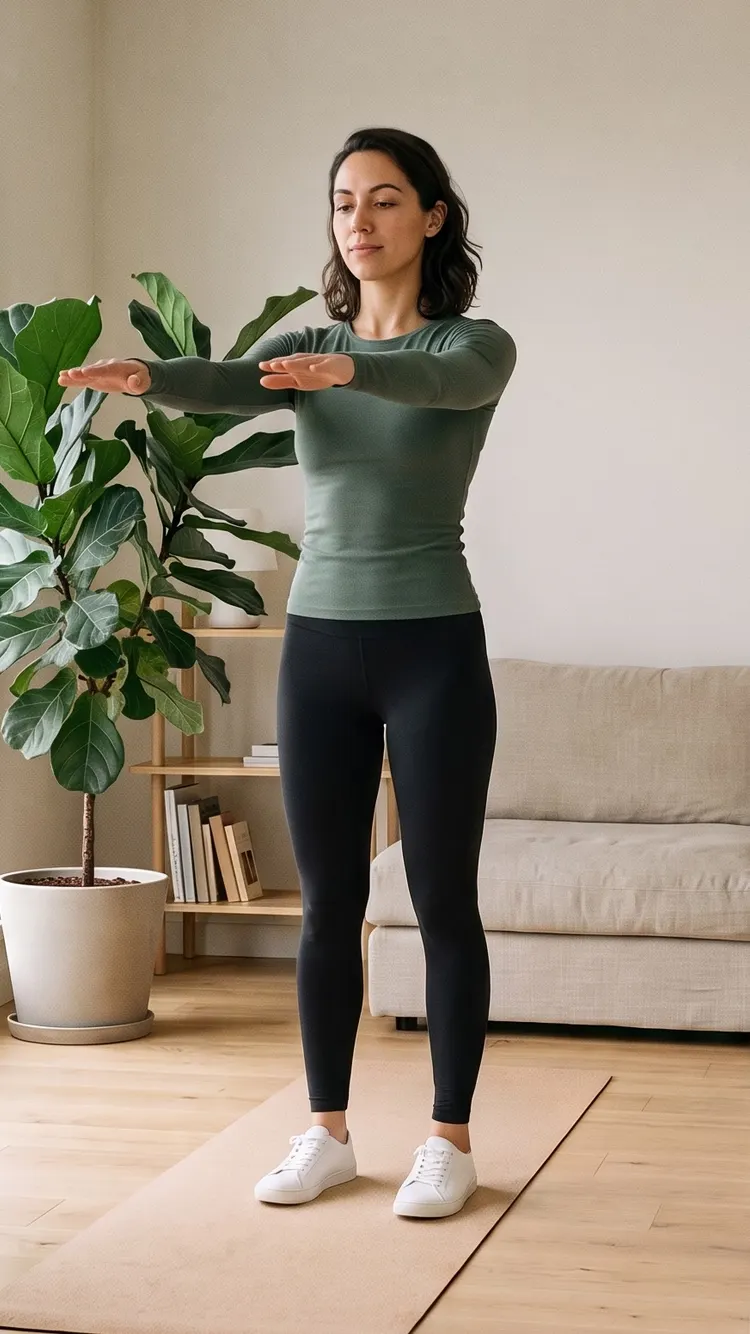
Slow arms and slow breathing finish the set and bring your pace down.
- Stand with your feet hip-width apart, knees soft. Let your arms hang.
- Breathe in. Let your hands float forward and up to shoulder height, palms down, as if the water is lifting them.
- Pause with your elbows soft and your shoulders low.
- Breathe out. Bend your knees a little as your palms sink down to your thighs.
- Repeat 6 times, slowly.
EasierLift your hands only to waist height, and rest one hand on the wall or counter.
Take care
- Balance: keep a wall or counter within reach. Stay in the range of knee bend that feels steady.
- Sensitive shoulders: lift your hands only to chest height.
- Sensitive knees: bend only a little.
A simple week
- Three days: all five moves, once through, in your own time.
- Two more days: a walk of any length, at the pace where you can still talk.
- Two rest days, or a light stretch. Add a second round of the moves when the first feels easy.
Build the habit with a 28-day walking plan
Short daily sessions at home, a step harder as you get stronger.
What the guidelines say
Balance activities: walking heel to toe, standing up from sitting.
Tai chi is a balance exercise. Have a sturdy chair or wall nearby.
National Institute on Aging (NIH), Three Types of Exercise
Any amount of activity is better than none, and all activity counts.
World Health Organization, Physical activity, fact sheet
Stop if anything hurts, or if you feel dizzy, short of breath or chest pressure.
General information, not medical advice.