How to start exercising at 60
Four easy moves and a gentle first week: a seated march, a sit to stand, a weight shift and a seated mountain.
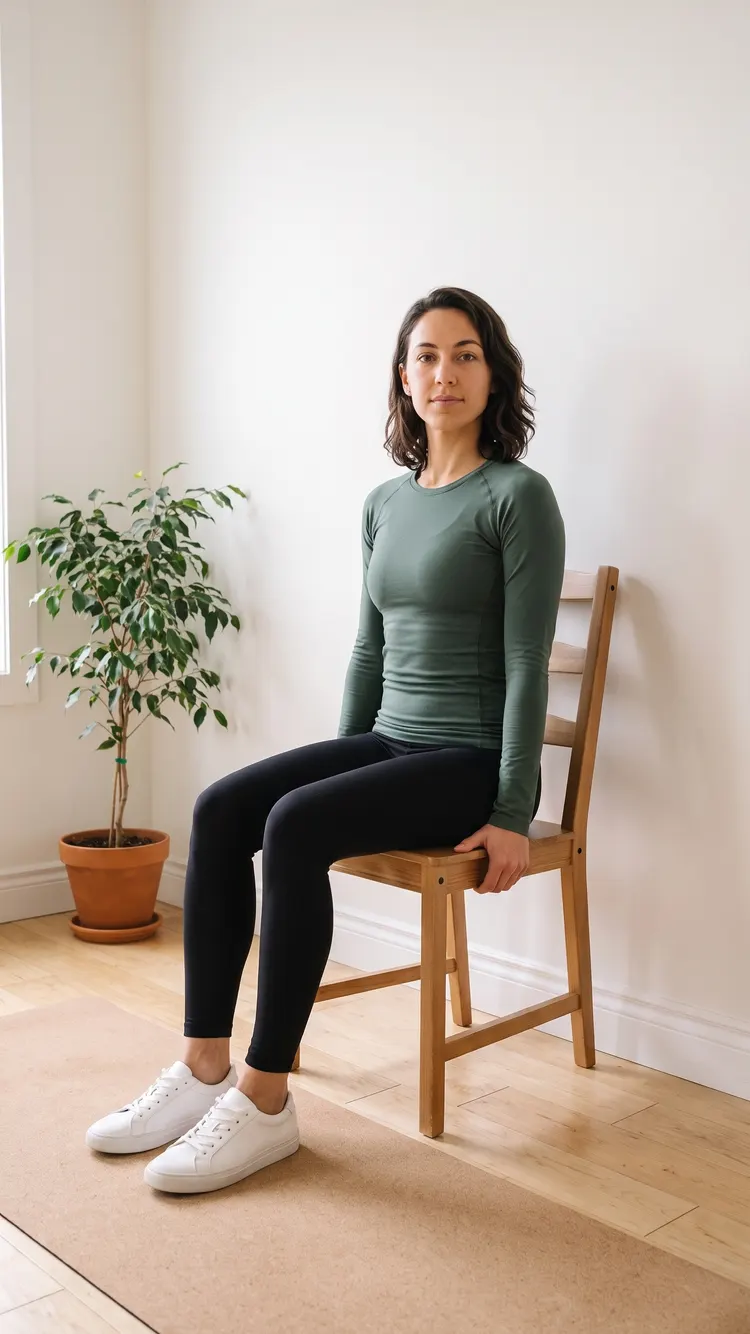
If you are starting at 60, or starting again, begin with the version you can do with an easy breath. These four moves start in a chair and add just a little standing. There is nothing to buy and almost nothing to set up.
The public guidelines suggest being as active as your abilities and conditions allow. That is a good rule for a first week: small, regular, and kind to yourself. You can always do a little more next week.
The moves, one by one
Sit in a sturdy chair against a wall. Take the four moves in order.
Seated march
A warm-up for your legs and breathing. If it is too much, just lift your heels.
- Sit tall near the front of your chair, feet flat. Rest your hands on your thighs or hold the sides of the seat.
- Lift your right knee a few inches. Place the foot softly down.
- Lift your left knee. Keep alternating at an easy pace.
- Swing your arms gently if it feels natural.
- March for 30 to 60 seconds.
EasierLift your heels only, keeping your toes on the floor.
Take care
- Back: sit tall rather than slumping.
- Hips: keep the lift small if a hip feels pinchy.
Sit to stand
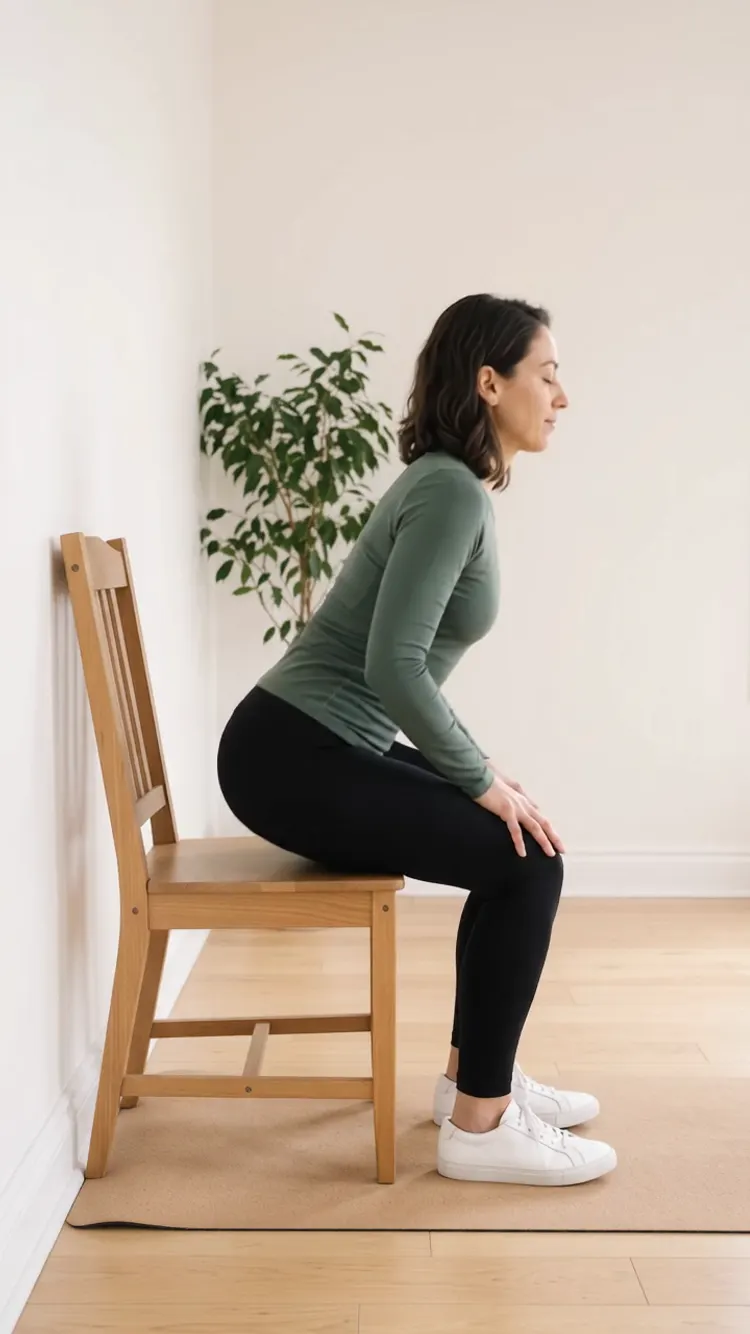
The most useful move on the page. Use your hands on your thighs and take your time sitting back down.
- Use a sturdy chair with no wheels, its back against a wall. Sit near the front edge with your feet flat, hip-width apart.
- Lean forward from your hips with a flat back, keeping your nose over your toes.
- Breathe out and press through your whole foot to stand up. Use your hands on your thighs if you want to.
- Stand tall for 1 breath, with your knees soft.
- Step back until you feel the chair on the back of your legs, then breathe in and lower slowly. Repeat 5 times.
EasierUse your hands on your thighs, or a higher seat with a firm cushion that will not slide.
Take care
- Sensitive knees or hips: use your hands to help and keep your feet a little wider.
- Back: lean from the hips and keep your back long.
- Balance: pause after you stand until you feel steady. Stand up slowly.
- Hip replacement: use a higher seat and bend at the hip only as far as your surgeon or therapist allows.
Weight shift
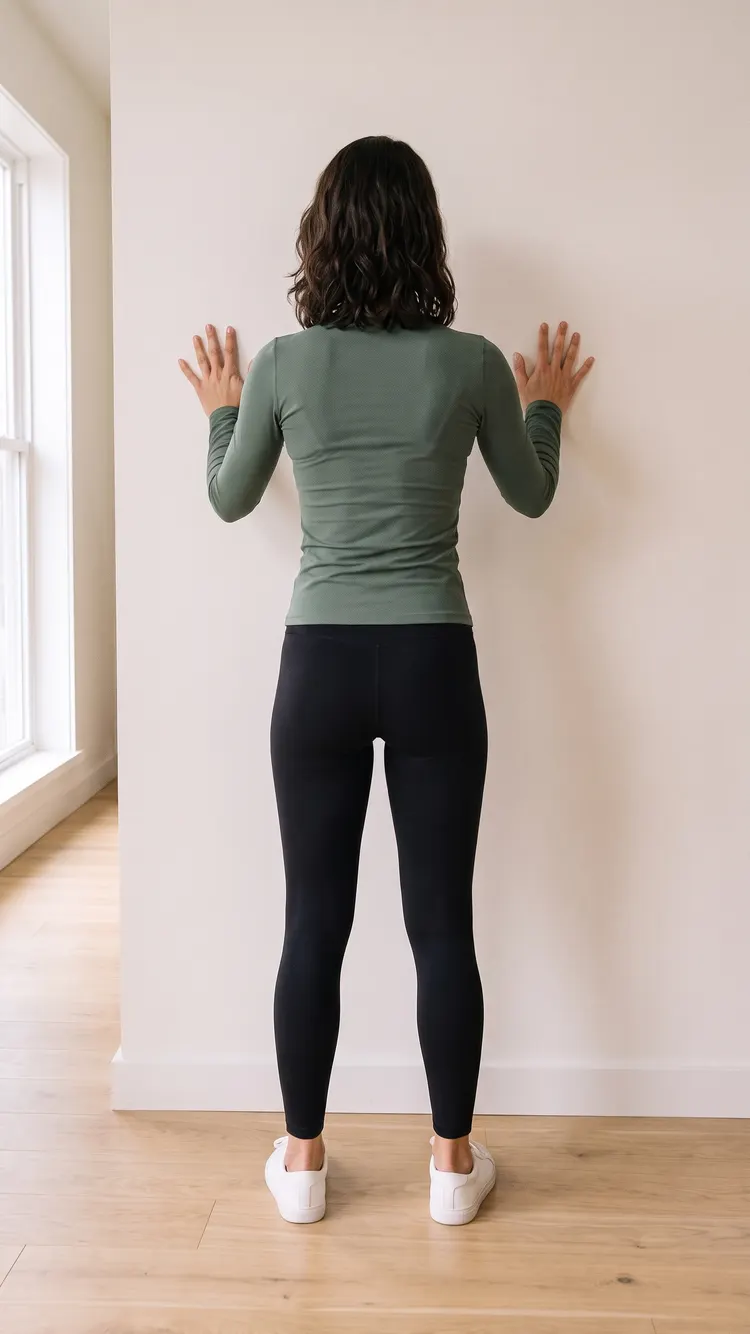
At the wall, rock gently from one foot to the other. Keep both hands on the support.
- Face the wall, about a forearm's length away, both hands flat on the wall at shoulder height. Or use a kitchen counter. Feet hip-width apart, knees soft.
- Breathe out and slowly move your weight onto your right foot, until it carries most of you.
- Keep your head over your hips and your chest tall.
- Breathe in and pour your weight back through the middle to your left foot.
- Rock side to side 8 times, slowly.
EasierShift only an inch or two, with both hands on the support.
Take care
- Balance: keep at least one hand on the wall, counter or chair back.
- Sensitive knees: keep the standing knee soft.
- Sensitive hips: shift a smaller way.
Seated mountain
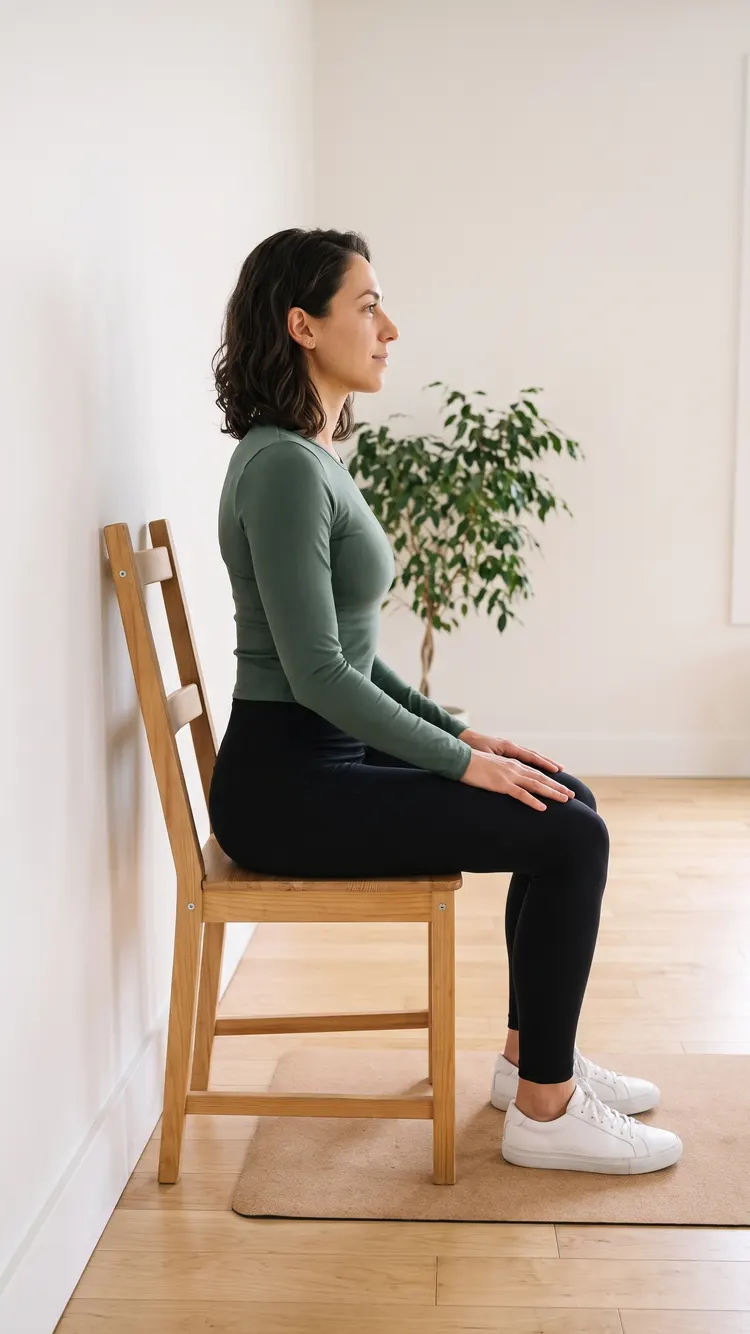
Sit tall and calm and breathe slowly. A good way to settle before you get up.
- Sit toward the front half of a sturdy chair with no wheels, with its back against a wall.
- Put your feet flat on the floor, about hip-width apart, knees over ankles.
- Rest your hands on your thighs, palms down.
- Lengthen up through the crown of your head. Let your shoulders drop away from your ears.
- Breathe in through your nose for 4 counts, then breathe out slowly for 4 counts. Stay for 5 to 8 breaths.
EasierSit back against the chair back and take 3 breaths.
Take care
- Back: sit tall without arching. Think long, not stiff.
- Stand up slowly when you finish.
A gentle first week
- Day 1, 3 and 5: the four moves once through.
- Day 2 and 4: the seated march alone, for as long as it feels good.
- Day 6 and 7: rest. Next week, add a second round of the sit to stand.
Go on from your first steps with a 28-day chair plan
Short daily sessions at home, a step harder as you get stronger.
What the guidelines say
Balance activities: walking heel to toe, standing up from sitting.
Too much? Be as active as your abilities and conditions allow.
Any amount of activity is better than none, and all activity counts.
World Health Organization, Physical activity, fact sheet
Stop if anything hurts, or if you feel dizzy, short of breath or chest pressure.
General information, not medical advice.