Wall push-ups, done well
The gentlest push-up, standing at a wall. Learn the form here, then move to the incline push-up when it feels easy.
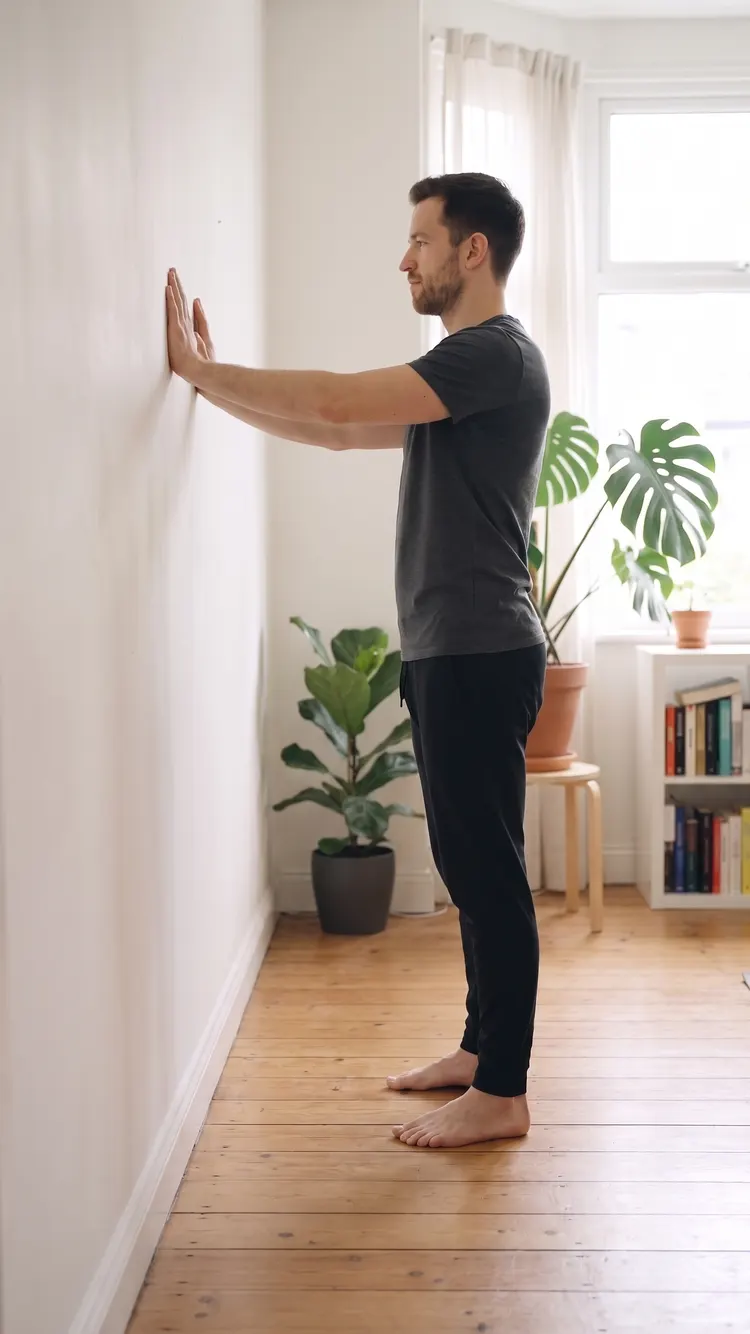
A wall push-up is a push-up with most of your weight taken away. It is a good first step for anyone returning to exercise, and a useful warm-up for anyone else. It teaches the pattern: a straight body, elbows bending, a smooth press.
Two things decide how hard it is: how far you stand from the wall, and how slowly you lower. Move your feet closer to make it lighter, further to make it heavier, and take three counts on the way down for an extra challenge.
The moves, one by one
Learn the wall push-up first, then see the step that follows it.
Wall push-up
Hands at shoulder height, a little wider than your shoulders. Keep your hips in line and press away smoothly.
- Stand facing a wall, about an arm's length away (closer is easier), feet hip-width apart.
- Place your hands on the wall at shoulder height, a little wider than your shoulders.
- Breathe in and bend your elbows, bringing your chest toward the wall. Keep your body in one straight line.
- Breathe out and press back until your arms are straight but not locked.
- Do 6 to 8 push-ups.
EasierStand closer to the wall, so you lean less. Do 4 push-ups.
Take care
- Shoulders: stop short of any pinch. Use a smaller bend.
- Sore wrists: place your hands a little lower, or turn your fingers slightly out.
- Balance: wear non-slip shoes and stand on a floor that is not slippery.
- Back: keep your body in one line and do not let your lower back sag.
Incline push-up
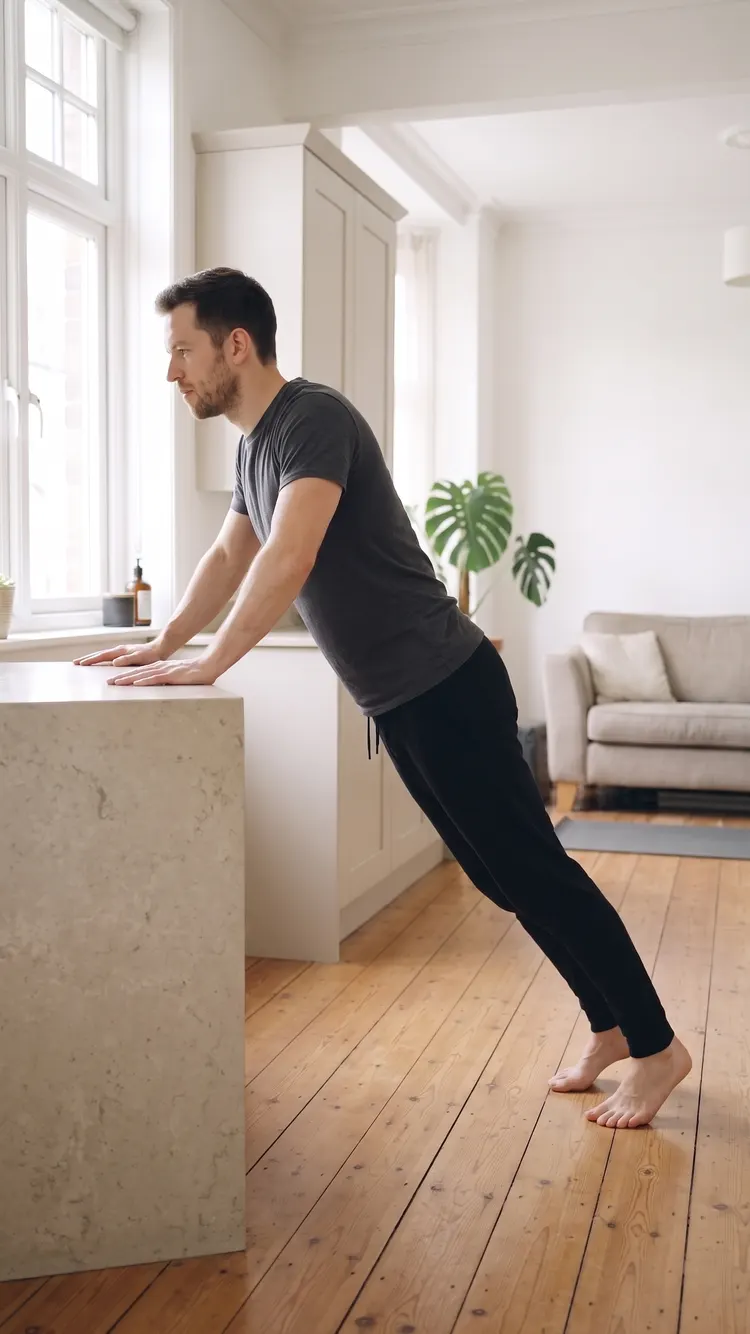
The next step. With your hands on a counter, your body slopes, and more of your weight goes through your arms.
- Choose a heavy counter or table that will not slide, and wear non-slip shoes.
- Place your hands on the edge, a little wider than your shoulders. Walk your feet back until your body makes one straight slope from head to heels.
- Breathe in and bend your elbows, bringing your chest toward the edge.
- Breathe out and press back until your arms are straight but not locked.
- Do 6 to 8 push-ups, then walk your feet in and stand tall.
EasierWalk your feet in closer so you lean less, or do wall push-ups.
Take care
- Wrists: if flat hands ache, make soft fists on the counter, or choose a wall push-up.
- Shoulders: use a smaller bend and stop short of any pinch.
- Balance: keep the counter steady and your shoes non-slip.
Using it in a week
- Three days: a set of wall push-ups, with a rest before a second set.
- Lower slowly on the days it feels easy.
- When a full set is easy with a straight body, try the incline push-up next.
Build strength with a 28-day calisthenics plan
Short daily sessions at home, a step harder as you get stronger.
What the guidelines say
Activities that strengthen muscles: at least 2 days a week.
Too much? Be as active as your abilities and conditions allow.
Any amount of activity is better than none, and all activity counts.
World Health Organization, Physical activity, fact sheet
Stop if anything hurts, or if you feel dizzy, short of breath or chest pressure.
General information, not medical advice.