Tai chi for beginners and seniors
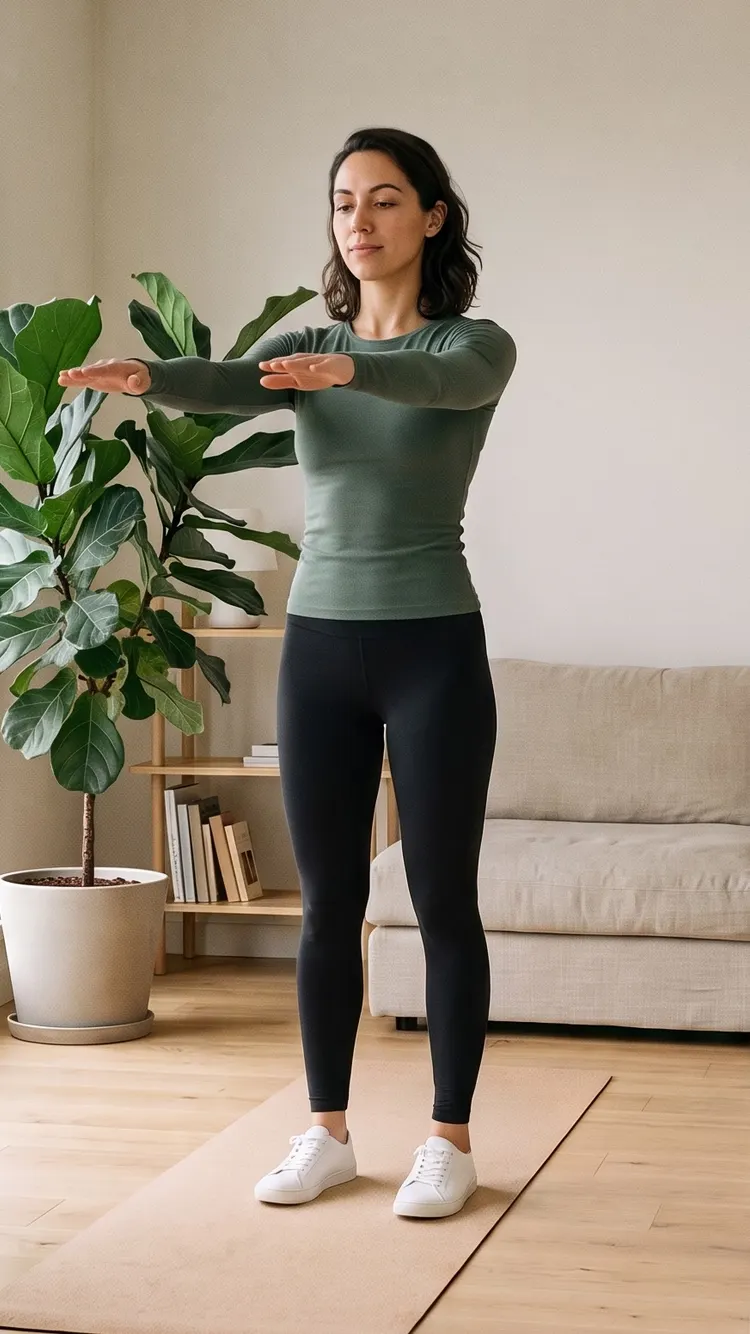
Tai chi is a series of slow, gentle movements and postures. A beginner can start with a few minutes a day and a wall or counter in reach: on day 1, our walking plan has Tai chi opening (1 min), Tai chi step (1 min 20 s), Closing form (1 min 20 s). The NIH's center for complementary health says tai chi appears to be safe.
What the sources say
Tai chi is a practice that involves a series of slow, gentle movements and physical postures.
National Center for Complementary and Integrative Health (NIH), Tai Chi: What You Need To Know
Tai chi is one of the National Institute on Aging's balance exercises. Have a sturdy chair, person or wall nearby to hold on to.
National Institute on Aging (NIH), Three Types of Exercise
Tai chi appears to be safe: a 2019 review of 24 studies (1,794 participants) found adverse events about as often as with another activity or none.
National Center for Complementary and Integrative Health (NIH), Tai Chi: What You Need To Know
Tai chi teachers don't have to be licensed, and the practice isn't regulated, so ask about a teacher's training and experience.
National Center for Complementary and Integrative Health (NIH), Tai Chi: What You Need To Know
The Older Adult Compendium lists "Tai Chi, general" at 3.8 MET60+ and "Tai Chi, chair, general" at 2.8.
Compendium of Physical Activities, Older Adult Compendium
The numbers, worked out
| Day | Session | Tai chi that day | Other moves |
|---|---|---|---|
| 1 | Find your feet | Tai chi opening (1 min), Tai chi step (1 min 20 s), Closing form (1 min 20 s) | 2 |
| 2 | Soft knees | Tai chi opening (1 min), Tai chi step (1 min 15 s), Closing form (1 min 10 s) | 3 |
| 3 | Clouds | Tai chi opening (50 s), Wave hands like clouds (1 min 45 s), Closing form (1 min 10 s) | 3 |
| 4 | Sound walk | Tai chi opening (50 s), Tai chi step (1 min), Wave hands like clouds (1 min 30 s), Closing form (1 min 10 s) | 2 |
| 5 | Standing like a tree | Tai chi opening (50 s), Embrace the tree (1 min 45 s), Closing form (1 min 10 s) | 3 |
| 6 | Slow is smooth | Tai chi opening (50 s), Wave hands like clouds (1 min 20 s), Embrace the tree (1 min 15 s), Closing form (1 min 10 s) | 2 |
| 8 | Part the mane | Tai chi opening (45 s), Part the horse's mane (2 min), Closing form (1 min 10 s) | 3 |
| 9 | Brush the knee | Tai chi opening (45 s), Part the horse's mane (1 min 20 s), Brush the knee (1 min 50 s), Closing form (1 min 10 s) | 2 |
| 10 | Gratitude walk | Tai chi opening (40 s), Wave hands like clouds (55 s), Part the horse's mane (1 min 10 s), Brush the knee (1 min 10 s), Closing form (1 min 10 s) | 2 |
| 11 | White crane | Tai chi opening (40 s), Closing form (1 min 10 s) | 4 |
| 12 | Arms that swing | Tai chi opening (40 s), Wave hands like clouds (1 min 10 s), Closing form (1 min 10 s) | 3 |
| 13 | Color walk | Tai chi opening (40 s), Brush the knee (1 min 20 s), Closing form (1 min 10 s) | 3 |
Each dose as the plan has it. Other moves: the session's breathing, balance and walking beside the tai chi. Day 7 is a rest day.
What to do with it
- Stand near a wall, a counter or a sturdy chair.
- Learn one move at a time, as the table adds them.
- Go slowly: small steps and soft knees.
Learn the moves at home with a 28-day walking plan
Short daily sessions at home, a step harder as you get stronger.
Stop if anything hurts, or if you feel dizzy, short of breath or chest pressure.
General information, not medical advice.